HEALTH NEWS ADVERTORIAL
Is Ashwagandha an Anticancer? What the Withanolide Research Actually Shows
Generic "immune support" bottles skip the withanolide chemistry that lab and early clinical work actually study — and most shoppers never notice the gap
See what preclinical and early human data say about withaferin A, why extract standardization matters, and what a research-grade KSM-66 formula actually delivers.
Adults researching adaptogens keep hearing the same reassurance: "Ashwagandha is an ancient Ayurvedic herb that supports immunity and cellular health — so the anticancer question is basically settled." It's a clean story. A root used for centuries. A modern capsule. A wellness aisle full of bottles promising "cellular defense." For a lot of people, that alone feels like enough.
But here's what the packaging doesn't spell out: "ashwagandha" on a label says almost nothing about whether the bottle contains the withanolide profile researchers actually study — or a diluted powder with barely measurable actives. A supplement can be organic, vegan, and still be built on an unstandardized root powder that never approaches the chemistry used in lab models of apoptosis, NF-κB signaling, or angiogenesis.
The evidence points somewhere else entirely.
When scientists ask whether Withania somnifera has anticancer potential, they are almost never studying a random bulk powder. They are isolating and testing specific steroidal lactones — especially withaferin A and related withanolides — at defined concentrations, in cell lines, animal models, and, more recently, early-phase human pharmacokinetics trials. That is a completely different question from "does any ashwagandha capsule on Amazon fight cancer?"
If you came here looking for a yes/no miracle claim, you will not get one. What you will get is the mechanism map, the comparison most labels hide, and a clear standard for what a research-minded extract should look like if cellular resilience and stress biology are part of your long game.
Withanolides are the signature bioactive class in ashwagandha root. Among them, withaferin A has drawn the most oncology attention because it can influence several pathways that tumors exploit to survive: it can inhibit NF-κB and AP-1 driven inflammatory signaling, promote mitochondria-mediated apoptosis, interfere with proteasome function, and disrupt heat-shock protein chaperone networks that help damaged cells stay alive under stress.
In plain language: certain ashwagandha compounds appear, in controlled lab settings, to make it harder for abnormal cells to ignore death signals, keep growing under inflammatory pressure, or recruit new blood vessels. That is why reviews in journals from Cancer Letters to Molecular Cancer Therapeutics keep returning to withaferin A — not to generic "root powder."
This is not a minor technicality. It is the reason two bottles both labeled "ashwagandha 600 mg" can be biologically non-equivalent. Without a standardized withanolide content and a full-spectrum root extract process, you may be swallowing plant material that never approaches the chemistry researchers use when they talk about anticancer pathways.
"Withaferin A has demonstrated potent anticancer activity across multiple preclinical models through induction of apoptosis, inhibition of NF-κB signaling, and disruption of oncogenic chaperone networks — yet translation into clinical oncology still depends on rigorous dose, formulation, and safety data."
PEER-REVIEWED WITHANOLIDE ONCOLOGY REVIEWS
Summarized from peer-reviewed withaferin A mechanism and translational literature
"In a phase I trial in advanced high-grade osteosarcoma, an oral withaferin A–containing root extract showed a favorable short-term safety profile and established pharmacokinetics — a necessary first step before any efficacy claims can be tested in larger human studies."
PHASE I CLINICAL INVESTIGATORS — OSTEOSARCOMA PK/SAFETY TRIAL
Paraphrased from published positions on withaferin A safety and pharmacokinetics in humans
"Patients often assume any ashwagandha capsule is interchangeable with the extracts used in research. In practice, withanolide content, root-only sourcing, and third-party standardization separate a research-grade adaptogen from a marketing label."
INTEGRATIVE ONCOLOGY DIETITIAN — CLINICAL PRACTICE COMMENTARY
Paraphrased from published clinical commentary on botanical extract quality and cancer-supportive care
And that's just the start. When the active withanolide profile is missing — no matter how "pure" or "organic" the rest of the label looks — the biology researchers study never gets a fair chance to show up in your routine.
WHY A GENERIC ASHWAGANDHA STILL ISN'T THE SAME AS A RESEARCH-GRADE WITHANOLIDE EXTRACT
| Common Choice | Why It Still Fails | What You Continue to Notice |
|---|---|---|
|
Bulk root powder capsules Unstandardized "ashwagandha 500–600 mg" |
Withanolide content can vary batch to batch; often far below levels used in mechanism studies of withaferin A and related lactones. | No clear change in stress recovery, sleep depth, or "cellular support" goals; hard to connect results to research headlines. |
|
"Immune blend" multi-herb formulas Ashwagandha buried with 8–12 other botanicals |
Dose of actual standardized extract is often token; no transparent withanolide guarantee; confounds any pathway-specific intent. | Busy label, weak signal — you still don't know if you got a research-relevant amount of withanolides. |
|
Leaf-heavy or mystery extracts Cheap extracts with unclear plant part |
Leaf and root differ in withanolide ratios; some cheap extracts spike one marker while missing full-spectrum root chemistry used in human stress trials. | Inconsistent effects, harder to map to published KSM-66 or withaferin A literature, more uncertainty on long-term use. |
"Think of withanolides as the keys on a specific lock. If the key is missing or filed down by poor extraction, turning the bottle does nothing to the lock — no matter how confident the marketing copy sounds."
BOTANICAL PHARMACOLOGY COMMENTARY
Paraphrased from published positions on extract standardization and bioactive equivalence
Picture a factory floor where damaged goods keep getting stamped "approved" because the quality-control sensors are offline. Inflammatory signaling stays loud. Apoptosis switches stay sticky. Chaperone proteins keep patching cells that should have been recycled. That is roughly what chronic cellular stress looks like when protective pathways are overwhelmed.
Withaferin A research is interesting because, in models, it looks less like a blunt toxin and more like a way to turn certain sensors back on — forcing abnormal cells to face the quality-control step they were skipping. Cortisol-driven stress biology sits on a related assembly line: when HPA-axis load stays high for months, repair priorities shift, sleep fragments, and the same inflammatory background noise gets louder.
A standardized full-spectrum root extract will not "cure cancer." That claim would be dishonest. What it can do — and what human KSM-66 trials actually document — is help normalize stress hormone patterns, support recovery, and give your system a cleaner operating baseline while researchers continue the harder oncology work on isolated withanolides.
THE STRESS-TO-CELLULAR-DAMAGE CYCLE TOUCHES NEARLY EVERY SYSTEM IN THE BODY, INCLUDING:
Day to day, the bottleneck rarely announces itself as a dramatic crisis. It shows up as the 3 p.m. crash that coffee only papers over. The wired-but-tired nights. The workout recovery that used to take a day and now takes four. The low-grade irritability that feels "just like modern life."
None of those symptoms is a cancer diagnosis — and this article is not medical advice or a treatment guide. But they are the lived texture of a stress-and-inflammation load that keeps the same biological machinery under pressure. People often treat them as separate complaints: a sleep problem here, a focus problem there, a stubborn midsection somewhere else.
They're not separate complaints. They're the same bottleneck wearing different masks — HPA-axis strain, withanolide-relevant cellular stress pathways, and a recovery system that never quite resets.
A mystery powder labeled "ashwagandha" can't deliver withanolide research chemistry. Which means the only real fix is a root-only, standardized extract with transparent clinical dosing — not another vague immune blend.
WHAT A TRULY RESEARCH-MINDED ASHWAGANDHA ACTUALLY NEEDS TO INCLUDE
Full-spectrum root extract (not leaf filler)
Root-only material aligns with the bulk of human KSM-66 stress, sleep, and vitality trials — and avoids the inconsistent withanolide ratios common in leaf-spiked powders.
Standardized withanolides you can verify
Look for a published standardization (KSM-66 is standardized to a clinically studied withanolide profile) so each capsule maps to research, not marketing adjectives.
Clinically studied daily dose (~600 mg)
Human trials on stress and cortisol typically use around 600 mg/day of KSM-66 — not a dusting inside a multi-herb proprietary blend.
Third-party testing for identity & purity
Heavy metals, microbes, and authentic plant identity matter more when you plan to take an adaptogen consistently for months.
Clean capsule design, no stimulant stack
Anticancer curiosity often coexists with sleep and anxiety goals. You want calm resilience — not a hidden caffeine spike.
Transparent brand accountability
A real guarantee and clear sourcing beat anonymous bottles that disappear when you have a quality question.
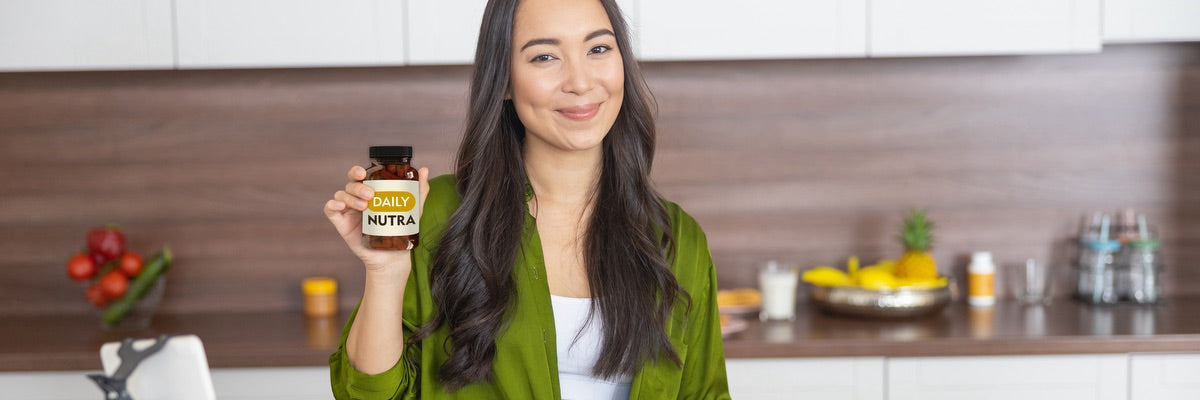
After comparing dozens of ashwagandha products on the market — bulk powders, "immune stacks," under-dosed blends, and leaf-heavy extracts — we found the same gap again and again: labels that borrowed the research language without delivering the extract standard the research used. So Daily Nutra built the formula we couldn't find.
Introducing
Daily Nutra KSM-66 Ashwagandha 600mg Capsules
Ancient Wisdom + Modern Science — standardized KSM-66 for real-world stress biology
| ✓ KSM-66® full-spectrum root extract — the world's most clinically studied ashwagandha | ✓ 600 mg per serving aligned with human stress & cortisol trial dosing |
| ✓ Standardized withanolide profile for batch-to-batch consistency | ✓ Root-only extraction — no leaf material shortcuts |
| ✓ Supports healthy cortisol balance and calm focus under pressure | ✓ Promotes deeper recovery and more restorative sleep quality |
| ✓ Third-party tested for purity, potency, and identity | ✓ Clean capsules — no stimulants, no proprietary mystery blends |
Limited production runs of research-grade KSM-66. When this batch sells through, restock can take weeks.
Stock status updates live — check availability before this run clears.
WHAT CUSTOMERS ARE REPORTING
|
94% report calmer stress response* |
<1% refund rate on qualifying orders |
4.8★ average customer rating |
3× sold-out waves last year |
★★★★★
"I came for the stress support after reading about withanolides. Three weeks in, my evenings finally feel quieter — not sedated, just less clenched."
— Jordan M.
★★★★★
"I had tried two cheap ashwagandha powders with zero effect. Switching to standardized KSM-66 was the first time I noticed sleep and morning calm actually move."
— Priya S.
★★★★★
"I'm not here for miracle claims. I wanted a transparent, root-only extract I could take consistently. This is the bottle that stayed in my stack."
— Chris D.
*Individual results vary. Testimonials reflect personal stress, sleep, and wellness experiences — not cancer treatment outcomes.
WHAT TO EXPECT — MONTH BY MONTH
Month 1
Many adults notice a quieter evening wind-down and slightly smoother stress spikes as cortisol patterns begin to settle with consistent daily dosing.
Months 2–3
Sleep continuity and daytime resilience often become more obvious. This is the window where "I feel more like myself under pressure" shows up for consistent users.
Months 4–6
Longer runs support the habit layer — stable recovery, fewer all-or-nothing stress days, and a clearer sense of whether standardized KSM-66 belongs in your permanent stack.
Limited production runs of research-grade KSM-66. When this batch sells through, restock can take weeks.
High demand weeks clear inventory fast — verify stock before the next sell-through.
Most adults spend more than the cost of a daily KSM-66 serving on a single café drink. Research-grade stress support starting around the price of a modest daily coffee is one of the rare cases where the clinically studied option is also the practical one.
90-DAY 100% MONEY-BACK GUARANTEE
Try Daily Nutra KSM-66 Ashwagandha risk-free. If it isn't the calm, consistent adaptogen support you expected, send it back — our qualifying refund rate stays exceptionally low because most people keep the bottle.
Don't settle for vague "immune" powder when the research conversation is about standardized withanolides.
KSM-66® root extract · 90-day guarantee · Made in the USA
🌿 Explore standardized KSM-66 ashwagandha — rooted in withanolide science, built for real-world stress resilience. See today's availability! ✨
STUDIES & SOURCES REFERENCED ▾
- Pires N, et al. "Safety and pharmacokinetics of Withaferin-A in advanced stage high grade osteosarcoma: A phase I trial." J Ayurveda Integr Med. 2020. PMC7125369
- Dutta R, et al. "Withania somnifera (Ashwagandha) and Withaferin A: Potential in modulation of cancer pathways." Review literature on apoptosis, NF-κB, and angiogenesis mechanisms.
- Palliyaguru DL, Singh SV, Kensler TW. "Withania somnifera: From prevention to treatment of cancer." Mol Nutr Food Res. 2016.
- Lee IC, Choi BY. "Withaferin-A—A Natural Anticancer Agent with Pleitropic Mechanisms of Action." Int J Mol Sci. 2016. PubMed 26959007
- Chandrasekhar K, Kapoor J, Anishetty S. "A prospective, randomized double-blind, placebo-controlled study of safety and efficacy of a high-concentration full-spectrum extract of ashwagandha root in reducing stress and anxiety in adults." Indian J Psychol Med. 2012. (KSM-66)
- Lopresti AL, et al. "An investigation into the stress-relieving and pharmacological actions of an ashwagandha (Withania somnifera) extract." Medicine. 2019.
- ClinicalTrials.gov. NCT05610735 — Combination therapy studies involving withaferin A formulations in oncology settings (ongoing/registered research context).
- Singh N, et al. "An overview on ashwagandha: A Rasayana (rejuvenator) of Ayurveda." Afr J Tradit Complement Altern Med. 2011.
*These statements have not been evaluated by the Food and Drug Administration. This product is not intended to diagnose, treat, cure, or prevent any disease. Ashwagandha and withaferin A research discussed here is educational and does not constitute cancer treatment advice. Always consult a qualified clinician, especially if you have a cancer diagnosis or take prescription medication.