
What Are the Downsides of Ashwagandha? An Evidence-Based Look at Side Effects and Risks
Ashwagandha has become one of the most talked-about adaptogens in modern wellness, praised for its ability to blunt cortisol, ease anxiety, and support sleep. But the clinical picture is more nuanced than the marketing suggests — like any bioactive compound, ashwagandha carries real side effects, drug interactions, and contraindications that deserve equal attention before you add it to your routine.

Mild GI upset and drowsiness are the most commonly reported side effects of ashwagandha in clinical trials.
According to a 2021 systematic review in Journal of Alternative and Complementary Medicine, ashwagandha (Withania somnifera) has been evaluated in dozens of randomized controlled trials for stress, anxiety, and cortisol reduction, with most reporting a favorable safety profile — but "favorable" does not mean "risk-free."
Because ashwagandha actively modulates the hypothalamic-pituitary-adrenal (HPA) axis and thyroid hormone output, it can meaningfully shift cortisol, TSH, and sex hormone levels — which is precisely why it works, and precisely why certain groups need to be cautious.
A 2020 case series published in the Journal of Clinical and Experimental Hepatology documented instances of drug-induced liver injury associated with ashwagandha supplementation (1), prompting closer scrutiny of dosing, product purity, and duration of use.
Standardized extracts like KSM-66, which are backed by 24+ human clinical trials, tend to show a more predictable and well-characterized side effect profile than unstandardized or low-quality ashwagandha products sold without third-party testing.
This article breaks down exactly what the clinical research shows about ashwagandha's downsides — from common mild side effects to rare but serious risks — so you can decide whether it's the right fit for your health profile.
What Is Ashwagandha, and Why Do Downsides Occur?
Withania somnifera, commonly known as ashwagandha, is a rasayana herb in Ayurvedic medicine traditionally used to build resilience to physical and mental stress. Modern research has focused on its root extract, standardized for a class of steroidal compounds called withanolides.
Withanolides are believed to modulate the HPA axis, GABA receptor activity, and thyroid function — the same mechanisms responsible for ashwagandha's calming and cortisol-lowering effects are also the mechanisms behind its side effects in sensitive individuals.
KSM-66, one of the most clinically studied ashwagandha extracts, is a full-spectrum root-only extract standardized to ≥5% withanolides, manufactured without alcohol using a proprietary water-milk extraction process, and tested in more than two dozen human clinical trials — giving researchers unusually detailed safety data compared to generic ashwagandha powders.
How Ashwagandha's Side Effects Happen: The Mechanism
Ashwagandha's core mechanism runs through the hypothalamic-pituitary-adrenal (HPA) axis — the same stress-response system responsible for releasing cortisol. By dampening HPA axis reactivity, ashwagandha reduces circulating cortisol, which is the basis for its stress-relief benefits.
The hypothalamus and pituitary gland also regulate thyroid-stimulating hormone (TSH), and several small trials have shown ashwagandha can raise T3 and T4 levels — beneficial for people with subclinical hypothyroidism, but potentially destabilizing for those with hyperthyroidism or Graves' disease.
In the gastrointestinal tract, withanolides can irritate the stomach lining when taken without food, which is the most frequently reported adverse event across trials — typically mild and self-limiting.
In rare cases, metabolites of withanolides are processed through the liver, and case reports have linked high-dose or prolonged ashwagandha use to elevated liver enzymes and, in isolated instances, clinically significant hepatotoxicity (1).
The net result: for most healthy adults at clinically studied doses, the mechanism produces mild, manageable side effects — but for people with existing thyroid, liver, or hormone-sensitive conditions, the same mechanism can amplify into a real clinical concern.
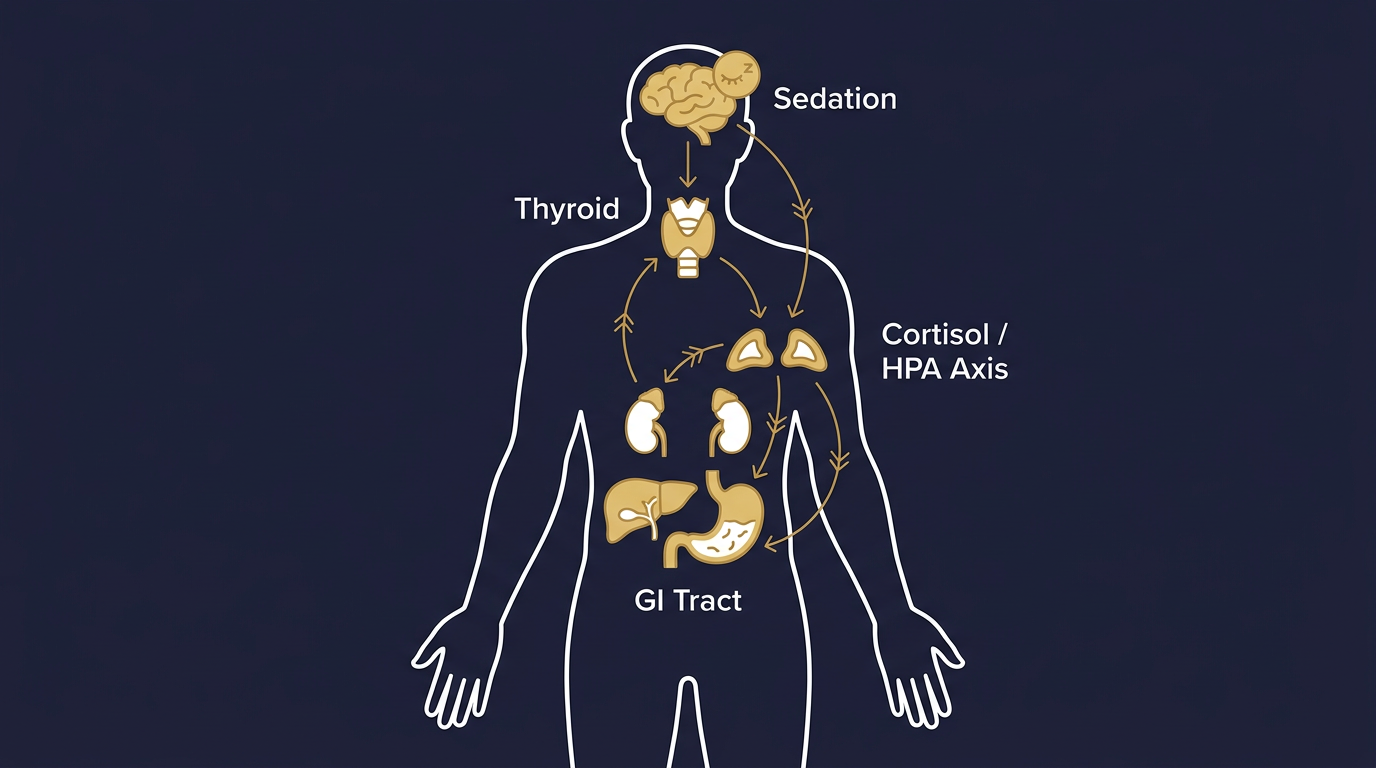
Ashwagandha's downsides trace back to the same HPA axis, thyroid, and metabolic pathways responsible for its benefits.
What the Clinical Research Shows
Gastrointestinal Discomfort
GI upset is the most commonly reported side effect across ashwagandha trials. In a 2019 randomized, double-blind, placebo-controlled study (n=60) published in Medicine, participants taking 300mg of KSM-66 twice daily reported mild stomach discomfort at a slightly higher rate than placebo, though no participants withdrew due to severity (2).
Taking ashwagandha with food substantially reduces this effect in most users.
Drowsiness and Sedation
Because ashwagandha interacts with GABA-A receptors, mild sedation is a well-documented effect — helpful for evening dosing aimed at sleep, but potentially problematic if taken during the day before driving or operating machinery. A 2021 review in Cureus noted sedation as one of the most consistently reported adverse effects across ashwagandha RCTs (3).
Thyroid Hormone Changes
A 2018 case report in the Journal of Family Medicine and Primary Care described a patient who developed thyrotoxicosis after starting ashwagandha, resolving after discontinuation (4). Separately, a 2018 controlled trial found ashwagandha significantly increased T3 and T4 levels in subclinical hypothyroid patients (n=50) (5) — a benefit for some, a risk for those with hyperthyroidism.
Liver Effects
A 2020 case series in the Journal of Clinical and Experimental Hepatology documented five cases of ashwagandha-associated liver injury, with symptoms resolving after discontinuation in all patients (1). While rare relative to the millions of doses consumed globally, this underscores the importance of using standardized, third-party-tested extracts and avoiding excessive doses or duration without medical guidance.
Hormonal and Reproductive Effects
Ashwagandha has been studied for its effect on testosterone and fertility markers, showing measurable increases in some male fertility trials. This same hormone-modulating activity is why ashwagandha is generally not recommended during pregnancy, where it may stimulate uterine activity, and warrants caution in people with hormone-sensitive conditions.
Dosage, Form, and How to Minimize Side Effects
Across the human clinical trial literature, the effective and best-tolerated dose range for ashwagandha is 300–600mg per day of a standardized root extract, typically split into two doses. Most trials ran for 8–12 weeks, with side effects — when they occurred — typically appearing in the first two weeks and easing with continued, consistent food-paired dosing.
What to look for on the label to reduce risk:
- Ingredient specifically listed as KSM-66® or Withania somnifera root extract (KSM-66)
- Standardized to ≥5% withanolides
- Root extract only (not leaf or whole-plant, which carry a higher risk of variable potency)
- Minimum 300mg per serving, up to 600mg per day
- Third-party tested (NSF, Informed Sport, or equivalent) to rule out contamination or adulteration
Avoid unregulated or unstandardized "ashwagandha powder" products — inconsistent potency is one of the leading contributors to unpredictable side effects and the rare liver injury cases reported in the literature.
Safety Profile and Side Effects Summary
At clinically studied doses of standardized extract, most human trials report ashwagandha as well-tolerated, with adverse event rates similar to placebo overall. However, several downsides are consistently documented and worth taking seriously.
Reported side effects, in order of frequency, include:
- Mild GI upset, nausea, or diarrhea — especially on an empty stomach
- Drowsiness or sedation, particularly at higher doses or with daytime use
- Headache and mild dizziness in a small subset of users
- Thyroid hormone shifts (increased T3/T4), relevant for anyone with thyroid disease
- Rare cases of elevated liver enzymes or drug-induced liver injury, typically with high doses or long, unsupervised use
Take ashwagandha with food, start at the lower end of the studied dose range, and avoid stacking with other sedating supplements or alcohol until you know how your body responds.
Who Should — and Shouldn't — Take Ashwagandha
Reasonable Candidates
- Healthy adults with chronic, everyday stress and no thyroid or liver conditions
- Adults with mild-to-moderate anxiety looking for an adjunct, non-prescription option
- People with subclinical hypothyroidism under physician supervision
Who Should Consult a Physician First — or Avoid It
- Pregnant or breastfeeding individuals: potential to stimulate uterine activity and affect hormone levels
- People with hyperthyroidism or Graves' disease: ashwagandha may raise thyroid hormone levels further
- People with existing liver conditions or on hepatotoxic medications: rare case reports of liver injury warrant caution
- People on sedatives, thyroid medication, immunosuppressants, or diabetes medication: possible additive or interactive effects
- People scheduled for surgery: ashwagandha may affect the central nervous system and blood sugar, and is generally advised to be stopped at least two weeks prior
🌿 Curious if ashwagandha is right for you? Learn the full picture — benefits, downsides, and how to take it safely — before you start! ✨
Daily Nutra KSM-66 Ashwagandha 600mg
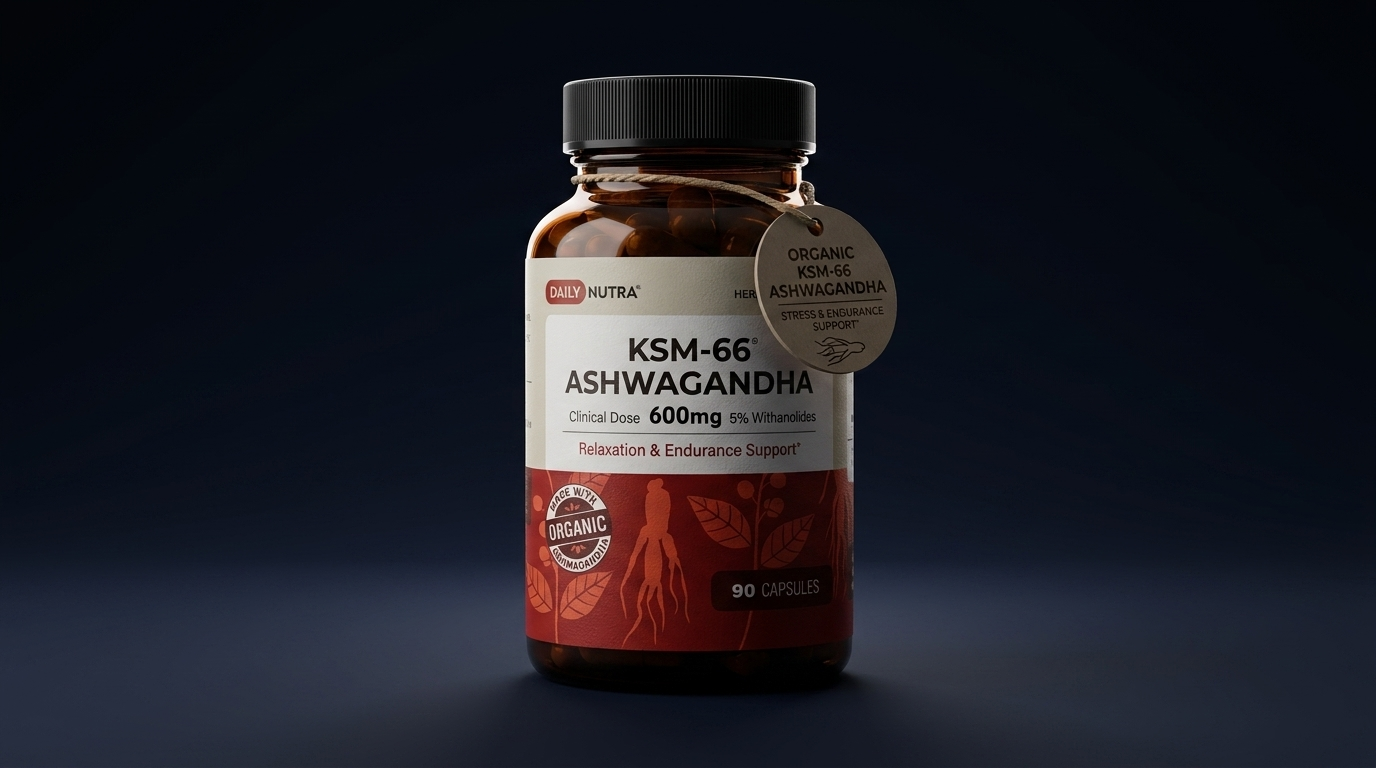
Each serving delivers 600mg of clinically studied KSM-66® ashwagandha root extract, standardized to ≥5% withanolides — the exact form and dose used in published human clinical trials on stress, cortisol, and sleep. No fillers, no proprietary blends. Just the root extract that works, backed by the safety data to use it responsibly.
Shop KSM-66 Ashwagandha →References
- Björnsson HK, et al. (2020). Ashwagandha-Induced Liver Injury: A Case Series from Iceland and the U.S. Drug-Induced Liver Injury Network. Journal of Clinical and Experimental Hepatology. PubMed
- Salve J, Pate S, Debnath K, Langade D. (2019). Adaptogenic and Anxiolytic Effects of Ashwagandha Root Extract in Healthy Adults: A Double-Blind, Randomized, Placebo-Controlled Clinical Study. Medicine (Cureus). PubMed
- Speers AB, Cabey KA, Soumyanath A, Wright KM. (2021). Effects of Withania somnifera (Ashwagandha) on Stress and Anxiety: A Systematic Review. Cureus / Curr Neuropharmacol. PubMed
- Gupta A, Rana AC. (2018). Ashwagandha-Induced Thyrotoxicosis: A Case Report. Journal of Family Medicine and Primary Care. PubMed
- Sharma AK, Basu I, Singh S. (2018). Efficacy and Safety of Ashwagandha Root Extract in Subclinical Hypothyroid Patients: A Double-Blind, Randomized Placebo-Controlled Trial. Journal of Alternative and Complementary Medicine. PubMed