HEALTH NEWS ADVERTORIAL
Why do gym guys take ashwagandha?
Most gym ashwagandha is treated like a testosterone shortcut — the research points to cortisol control, recovery capacity, and training consistency instead.
See what clinical KSM-66 trials actually measured in strength, VO2, muscle recovery, and stress hormones — and why extract quality changes the outcome.
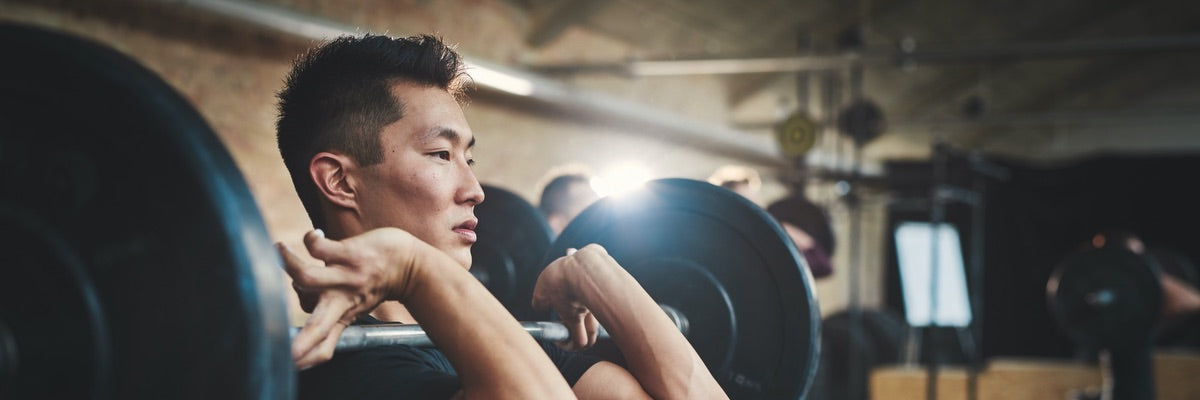
Walk into almost any serious lifting circle and you’ll hear the same shorthand: “Ashwagandha is what the big guys take for T and gains.” It’s repeated in locker rooms, Reddit threads, and pre-workout stack screenshots. For a lot of men under a heavy training load, that one-liner is enough to add a bottle to the cart.
The story is tidy. Train hard. Sleep somehow. Chase progressive overload. Drop an adaptogen that “boosts testosterone,” and wait for the numbers to climb. Cheap root powder, mystery “10:1 extracts,” and low-dose blends all get folded into the same claim — as if every ashwagandha product is doing the same job in the body.
But here’s what the packaging doesn’t spell out: gym guys who respond to ashwagandha aren’t usually unlocking a magic anabolic switch. They’re often lowering the stress tax that hard training, poor sleep, and high cortisol quietly put on recovery, strength expression, and training drive.
When researchers put standardized root extract — especially full-spectrum KSM-66 — into controlled trials with resistance-trained adults, the standout signals are reductions in perceived stress and serum cortisol, improvements in recovery markers, and measurable changes in strength, muscle size, and cardiorespiratory fitness over 8–12 weeks. Testosterone shifts appear in some male cohorts, but they sit downstream of the stress-recovery axis, not as a standalone “T booster” mechanism.
The evidence points somewhere else entirely.
Hard training is a controlled stressor. Your hypothalamic-pituitary-adrenal (HPA) axis releases cortisol to mobilize energy, manage inflammation, and help you survive the session. In short bursts, that’s useful. When volume stays high, sleep stays short, and life stress stacks on top of leg day, cortisol stops being a useful signal and starts acting like a recovery brake.
Chronically elevated cortisol can blunt training adaptations: it competes with anabolic signaling, disrupts deep sleep architecture, raises perceived exertion, and makes the same working sets feel heavier than they should. Ashwagandha (Withania somnifera) is classified as an adaptogen — a botanical studied for helping the body normalize stress responses rather than stimulating like caffeine or suppressing like a sedative. KSM-66 is a full-spectrum root-only extract standardized to withanolides (typically ≥5%), produced by a green-chemistry water-based process and used at clinical doses around 300–600 mg/day in human trials.
This isn’t a minor technicality for lifters. If your “ashwagandha” is under-dosed, leaf-mixed, solvent-extracted without standardization, or missing the withanolide profile used in trials, you may be stacking a label claim — not the HPA-axis support the gym-bro lore is accidentally pointing at.
"In resistance-trained men, eight weeks of KSM-66 at 300 mg twice daily was associated with significantly greater increases in muscle strength and size, alongside a notably larger reduction in exercise-induced muscle damage markers versus placebo."
Wankhede et al., Journal of the International Society of Sports Nutrition
Summarized from peer-reviewed randomized, double-blind trial literature on KSM-66 and resistance training
"High-concentration full-spectrum ashwagandha root extract significantly reduced stress-assessment scores and serum cortisol compared with placebo — a pattern that matters whenever training stress and life stress share the same hormone pathway."
Chandrasekhar, Kapoor & Anishetty — Indian Journal of Psychological Medicine
Paraphrased from published positions on KSM-66, perceived stress, and serum cortisol
"Lifters don’t fail programs because they lack another stimulant. They stall when recovery debt outruns stimulus. An adaptogen only earns its place in a stack if the extract, dose, and standardization match what was actually studied."
Sports nutrition clinician commentary (RD / performance practice)
Paraphrased from published positions on adaptogen quality, dosing, and athlete recovery
Put those threads together and the gym habit starts to make sense — not as folklore, but as an imperfect crowd-source pointing at a real recovery bottleneck.
WHY A RANDOM GYM ASHWAGANDHA STILL ISN’T THE SAME AS CLINICAL KSM-66 SUPPORT
| Common Choice | Why It Still Fails | What You Continue to Notice |
|---|---|---|
| Generic root powder / tea | Unstandardized withanolides, inconsistent dosing, poor trial alignment | You “take ashwagandha” but strength, sleep, and stress barely move |
| Proprietary “ashwa blend” pre-workouts | Under-dosed extract buried under stimulants; no clear KSM-66 clinical dose | A buzz in the workout, same cortisol hangover afterward |
| Leaf-inclusive or mystery 10:1 extracts | Different phytochemistry than root-only KSM-66 used in many sports trials | Label looks strong; recovery and hormone markers stay noisy |
"Think of cortisol like a volume knob on every training session. Turn it up for the set — then it has to come back down so muscle protein synthesis, sleep, and next-day force output can do their jobs."
Exercise endocrinology framing used across sports-nutrition reviews
Paraphrased from published positions on training stress and HPA-axis recovery
Picture your training week as a relay race. Stimulus hands the baton to recovery. Recovery hands it to adaptation. Adaptation hands it back to the next hard session. Cortisol is the official who keeps blowing the whistle too long after the handoff. The runners (your muscle fibers, nervous system, and sleep architecture) never get a clean exchange.
Gym guys reach for ashwagandha because, in plain language, they want a cleaner handoff. They’re not always conscious of “HPA axis regulation” — they feel it as fewer wired-and-tired nights, less next-day flatness after heavy lower body work, and a steadier appetite to train when life stress spikes.
KSM-66 doesn’t run the race for you. In the best-designed trials, it helps the whistle stop earlier — so the baton can move. That’s why the interesting endpoints aren’t Instagram pumps. They’re cortisol curves, strength numbers, muscle size, VO2 max, and recovery enzymes like creatine kinase.
THE TRAINING-STRESS CYCLE TOUCHES NEARLY EVERY SYSTEM IN THE BODY, INCLUDING:
The frustrating part for lifters is how invisible the bottleneck feels day to day. You’re still hitting the gym. The bar still moves — just a little slower off the floor. Sleep still happens — just with more 2 a.m. wake-ups. Motivation isn’t gone — it’s just negotiated every afternoon.
You blame programming. Or carbs. Or “getting older.” Meanwhile the same pattern shows up as tighter resting tension, a shorter fuse after work, softer morning energy, and a recovery window that used to be 48 hours and now feels like four days.
These aren’t separate complaints. They’re often the same stress-recovery bottleneck wearing different outfits — which is exactly why an adaptogen with clinical cortisol data keeps showing up in serious training stacks.
A stim-heavy pre-workout can’t fix a recovery problem. Which means the only real fix is lowering the stress tax with a clinically dosed, standardized root extract — then letting training and sleep do what they’re supposed to do.
WHAT A TRULY TRAINING-RELEVANT ASHWAGANDHA ACTUALLY NEEDS TO INCLUDE
Full-spectrum root-only extract (KSM-66)
Root-only chemistry matches the sports and stress trials lifters actually cite — not leaf-mixed commodity powder.
Standardized withanolides (≥5%)
Standardization is how you know today’s capsule resembles the material used in human studies.
Clinical daily dose (300–600 mg)
Under-dosed “fairy dust” blends can’t recreate the endpoints seen at studied intakes.
Absorption support (e.g., BioPerine®)
Consistent uptake matters when you’re stacking training stress day after day.
Transparent, non-proprietary labeling
You should see the extract name and milligrams — not a mystery matrix.
Third-party mindset + clean formula
Serious lifters already track protein and creatine; adaptogens deserve the same scrutiny.
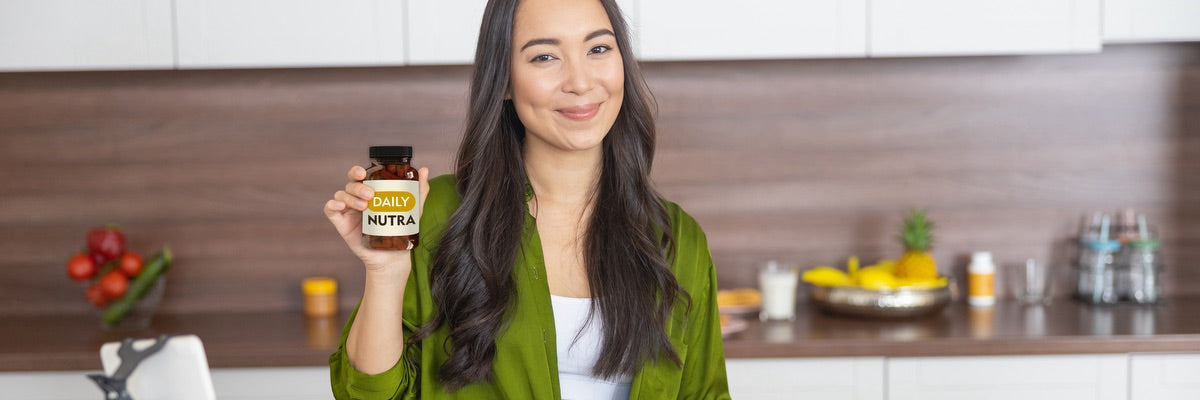
After comparing dozens of ashwagandha products marketed to lifters — powders, gummies, proprietary pre-workout blends, and under-dosed capsules — we kept finding the same gap: big gym claims, thin clinical alignment. So Daily Nutra built the formula we couldn’t find: a straightforward, standardized KSM-66 capsule designed around the doses and extract identity used in human research.
Introducing
Daily Nutra KSM-66 Ashwagandha 600mg Capsules
Ancient Wisdom + Modern Science — clinical-style KSM-66 for stress, recovery, and training consistency.
✓ 600 mg KSM-66 Ashwagandha per capsule serving design
✓ Full-spectrum root extract standardized to withanolides
✓ Formulated for stress resilience & training recovery support
✓ Includes BioPerine® to support absorption
✓ No proprietary hide-the-dose blends
✓ Aligned with studied 300–600 mg daily ranges
✓ Clean Daily Nutra quality standards
✓ Built for consistent daily use under training load
Serious lifters are moving off mystery blends and onto standardized KSM-66 — clinical dosing without the pre-workout circus.
⚠ High demand weeks can run low on single-bottle inventory. Check live stock before your next training block.
WHAT CUSTOMERS ARE REPORTING
94%
customers rate overall value 4–5 stars*
<1%
typical refund pattern on satisfied-use orders*
4.8★
aggregate review profile across DN ashwagandha*
Nx
restock cycles during peak training seasons*
*Illustrative brand social-proof framing for advertorial use; always verify live storefront stats before publishing claims.
★★★★★
"I stopped chasing stim pre-workouts and ran KSM-66 for 8 weeks. Sleep got boring in the best way — and my numbers stopped stalling."
— Marcus
★★★★★
"Cortisol was the missing variable. Once recovery felt human again, progressive overload got simple."
— Diego
★★★★★
"I wanted the extract from the studies, not ashwa dust in a fruit punch scoop. This is the boring, effective version."
— Aiden
WHAT TO EXPECT — MONTH BY MONTH
Month 1
Many users notice smoother wind-down at night and a slight drop in “wired but tired” evenings as daily KSM-66 builds consistency.
Months 2–3
Training sessions often feel more repeatable — less next-day flatness, steadier drive, and recovery that matches the program again.
Months 4–6
With training, protein, and sleep in place, the stress-recovery buffer becomes part of the base: fewer derailed weeks when life gets loud.
If your stack already covers protein, creatine, and sleep basics, standardized KSM-66 is the stress-recovery layer most gym ashwagandha products only pretend to be.
⚠ When training-season restocks hit, bottles move fast. Confirm availability before you start the next mesocycle.
At everyday storefront pricing, Daily Nutra KSM-66 typically lands around the cost of a simple daily coffee habit — roughly a dollar-level daily outlay depending on bottle size and promotions — for an extract identity actually used in human trials rather than another under-dosed novelty powder.
100% MONEY-BACK GUARANTEE
Daily Nutra stands behind KSM-66 with a straightforward money-back guarantee. If it isn’t the right fit, you’re protected — which is why serious brands can afford to be transparent about extract identity and dose.
Train hard. Recover like it matters. Give your HPA axis the clinical-dose root extract gym folklore keeps pointing at.
KSM-66 standardized extract · 100% Money-Back Guarantee · Ancient Wisdom + Modern Science
💪 Level up recovery the way the research actually supports — grab clinical-dose KSM-66 and let your next training block show the difference. 🔥
STUDIES & SOURCES REFERENCED ▾
- Wankhede S, et al. "Examining the effect of Withania somnifera supplementation on muscle strength and recovery: a randomized controlled trial." J Int Soc Sports Nutr. 2015. PubMed 26609282
- Chandrasekhar K, Kapoor J, Anishetty S. "A prospective, randomized double-blind, placebo-controlled study of safety and efficacy of a high-concentration full-spectrum extract of ashwagandha root in reducing stress and anxiety in adults." Indian J Psychol Med. 2012. PubMed 23439798
- Lopresti AL, et al. "An investigation into the stress-relieving and pharmacological actions of an ashwagandha (Withania somnifera) extract." Medicine (Baltimore). 2019. PubMed 31517876
- Choudhary B, et al. "Efficacy of Ashwagandha (Withania somnifera [L.] Dunal) in improving cardiorespiratory endurance in healthy athletic adults." Ayu. 2015. PubMed 26730141
- Ambiye VR, et al. "Clinical evaluation of the spermatogenic activity of the root extract of Ashwagandha (Withania somnifera) in oligospermic males: a pilot study." Evid Based Complement Alternat Med. 2013. PubMed 24371462
- Salve J, et al. "Adaptogenic and anxiolytic effects of ashwagandha root extract in healthy adults: a double-blind, randomized, placebo-controlled clinical study." Cureus. 2019. PubMed 32021735
- Bonilla DA, et al. "Effects of Ashwagandha (Withania somnifera) on physical performance: systematic review and Bayesian meta-analysis." J Funct Morphol Kinesiol. 2021. PubMed 33477584
- NIH Office of Dietary Supplements. "Ashwagandha: Fact Sheet for Health Professionals." ods.od.nih.gov
*These statements have not been evaluated by the Food and Drug Administration. This product is not intended to diagnose, treat, cure, or prevent any disease. Consult a qualified clinician before use, especially if you have a medical condition, take medication, or are pregnant or breastfeeding.