Do I take ashwagandha in the morning or night?
You bought the bottle. You read the label. Then you hit the same question almost everyone asks on day one: do I take ashwagandha in the morning or at night? The short clinical answer is that both windows can work — but the best time depends on whether you are targeting daytime stress resilience, evening wind-down, or full-day HPA axis support with a split dose. KSM-66® Ashwagandha is the extract with the deepest human trial record on this decision.
Timing is not a marketing detail — it shapes how KSM-66 intersects with your natural cortisol rhythm and sleep architecture.
Cortisol follows a predictable circadian pattern in healthy adults: it rises sharply in the early morning (the cortisol awakening response), supports alertness through the day, then declines toward evening so melatonin and deep sleep can take over. When chronic stress flattens or delays that curve, people feel wired at night, foggy at dawn, or both — a pattern documented across occupational stress and sleep-disruption research from the NIH and related endocrine literature.
Ashwagandha (Withania somnifera) is classified in Ayurveda as a rasayana — a restorative adaptogen — and modern trials show standardized root extracts can lower perceived stress and serum cortisol while improving sleep quality and recovery markers. That dual action is exactly why morning-versus-night dosing confuses people: the same botanical can feel mildly energizing for some and gently calming for others.
In a landmark randomized, double-blind, placebo-controlled trial, adults taking 300 mg of KSM-66 twice daily for 60 days saw serum cortisol fall by roughly 27.9% versus placebo, with large reductions in perceived stress scores (1). Other trials used once-daily evening dosing specifically for sleep outcomes (2).
Generic “ashwagandha powder” is not interchangeable with those results. KSM-66 is a full-spectrum root-only extract produced with a green-chemistry milk process, standardized to ≥5% withanolides, and backed by more than two dozen human clinical studies — the form Daily Nutra uses at a clinical 600 mg daily serving.
This article breaks down how KSM-66 interacts with the HPA axis, what morning versus night dosing each optimizes, what the trial protocols actually used, how to dose it safely, and who should clear it with a clinician first.
What Is KSM-66 Ashwagandha?
Withania somnifera — commonly called ashwagandha or Indian winter cherry — has been used for more than 3,000 years in Ayurvedic medicine as a rasayana for vitality, resilience, and restorative sleep. Traditional preparations emphasized the root; leaf material was used differently and is not the basis of most modern stress trials.
The primary bioactive compounds are a group of steroidal lactones called withanolides (including withaferin A and withanolide A). These molecules appear to modulate stress signaling, GABA-related calm, and downstream inflammatory tone — which is why outcomes span cortisol, anxiety scales, sleep latency, and recovery metrics rather than a single “stimulant or sedative” label.
KSM-66® is a branded, full-spectrum root extract manufactured by Ixoreal Biomed. It uses only the root, avoids harsh solvents, standardizes to ≥5% withanolides, and carries extensive safety and clinical documentation. When human trials report “ashwagandha 300 mg twice daily,” they are often describing this exact extract — not an unstandardized bulk powder.
How KSM-66 Ashwagandha Works: HPA Axis and Circadian Timing
Your stress response is governed by the hypothalamic–pituitary–adrenal (HPA) axis. Under perceived threat, the hypothalamus releases CRH, the pituitary gland secretes ACTH, and the adrenal cortex releases cortisol. Short bursts are adaptive. Chronic activation keeps cortisol elevated or dysregulated across the day–night cycle.
Withanolides appear to help recalibrate that cascade. Proposed mechanisms include reduced stress-driven overactivation of the HPA axis, support for GABAergic calm, and improved resilience markers under sustained load (1)(3). The practical result is not a jolt of caffeine-like stimulation and not a pharmaceutical sedative — it is a quieter stress signal with room for either daytime focus or nighttime recovery depending on context.
That is why timing matters. Morning dosing places the extract alongside the natural cortisol peak and the day’s cognitive load, which many people prefer when the goal is steady stress resilience, mood stability, and training recovery without evening drowsiness. Evening dosing aligns with the descending limb of the cortisol curve and is the window most often chosen in sleep-focused protocols.
In chronic stress states, people often lose the clean morning rise and evening fall. Supporting HPA balance with a clinically dosed root extract can help restore a more functional rhythm over weeks — which is why most meaningful trial endpoints are measured at 4–8 weeks, not after a single capsule.
Net clinical pattern across KSM-66 literature: lower perceived stress, lower serum cortisol, better sleep quality scores, and improved well-being when the dose and extract match the published protocols (1)(2)(4).
Morning dosing supports daytime stress load; evening dosing tracks the natural cortisol decline and sleep recovery window.
What the Clinical Research Shows
Morning and split-dose protocols for stress and cortisol
Chandrasekhar, Kapoor, and Anishetty (2012) randomized stressed adults to KSM-66 300 mg twice daily or placebo for 60 days. The ashwagandha group showed a 44% reduction on the Perceived Stress Scale and an approximate 27.9% drop in serum cortisol relative to baseline, significantly outperforming placebo (1). Twice-daily dosing inherently covers morning and later-day exposure — a useful template if your goal is all-day HPA support rather than sleep alone.
Lopresti et al. (2019) evaluated ashwagandha extract in stressed adults and likewise reported improvements in anxiety and stress scales with favorable safety, reinforcing that standardized root extracts can move validated psychological endpoints in modern trial designs (3).
Evening dosing for sleep quality
Langade et al. (2020) studied ashwagandha root extract in adults with insomnia and anxiety using a protocol centered on restorative outcomes. Participants receiving ashwagandha showed significant improvements in sleep onset latency, sleep efficiency, and sleep quality versus placebo over the study period (2). When sleep is the primary complaint — racing mind at bedtime, long sleep latency, non-restorative rest — clinicians and formulators often prefer evening administration so any mild calming effect coincides with wind-down.
A related randomized study on sleep in healthy adults also found ashwagandha root extract improved sleep quality parameters versus placebo, supporting evening use when restorative sleep is the main target (4).
Cognitive calm, energy perception, and non-sedating daytime use
Not everyone becomes drowsy on ashwagandha. Many trial participants report clearer calm and better stress tolerance without next-day hangover. That profile is why morning use is common among professionals and athletes who want resilience under load rather than sedation. If you have previously felt heavy or sleepy after a dose, shift the full serving to evening. If you feel even and focused, morning or split dosing is usually preferable.
Practical synthesis: which clock time wins?
Choose morning if your priority is daytime stress, focus under pressure, or training recovery and you do not need help falling asleep. Choose night if sleep latency, nighttime rumination, or non-restorative sleep is the dominant problem. Choose split dosing (for example 300 mg morning + 300 mg evening to reach a 600 mg clinical daily total) when you want full-day HPA coverage matching several KSM-66 stress trials. Consistency over 4–8 weeks matters more than perfect clock timing on day one.
Dosage, Form, and What to Look For on the Label
Across the human clinical trial literature, the effective dose range for KSM-66 Ashwagandha is typically 300–600 mg per day of standardized root extract. Many stress studies used 300 mg twice daily; sleep-focused work often used a once-daily serving in the evening. Most trials ran for 6–8 weeks, with meaningful changes often emerging after the first 2–4 weeks of daily use.
Timing guidance in plain language:
- Morning: Take with breakfast if stress, mood stability, or daytime performance is the goal.
- Night: Take 30–60 minutes before bed if sleep quality is the primary goal.
- Split: 300 mg AM + 300 mg PM when matching classic twice-daily KSM-66 stress protocols for a 600 mg daily total.
- With food: A small meal or snack reduces the chance of mild stomach upset.
What to look for on the label:
- Ingredient specifically listed as KSM-66® or Withania somnifera root extract (KSM-66)
- Standardized to ≥5% withanolides
- Root extract only (not leaf or whole-plant blends that dilute clinical equivalence)
- Minimum 600 mg per daily serving when you want to match common full clinical daily totals
- Third-party tested for identity, potency, and contaminants
Avoid products that simply list “ashwagandha” without a standardized extract name, withanolide percentage, or root-only claim — those products often cannot replicate the outcomes published in KSM-66 trials.
Safety Profile and Side Effects
KSM-66 has been well tolerated in human clinical trials at commonly studied doses, with adverse event rates generally comparable to placebo over multi-week interventions (1)(3). It is not a stimulant and is not a prescription hypnotic, which is part of why both morning and night schedules appear in the literature.
Mild side effects reported in a minority of participants include:
- Mild GI upset if taken on an empty stomach
- Mild sedation or heaviness (more noticeable with larger evening doses — often useful for sleep, less ideal before a demanding morning)
- Rare reports of vivid dreams
- Occasional headache during the first days of use
Take with food or a small snack to minimize GI sensitivity, especially during the first two weeks. If morning dosing makes you sluggish, move the full dose to evening. If evening dosing leaves you too sedated the next morning, reduce the night serving or shift earlier with dinner.
Who Should — and Shouldn't — Take KSM-66
Ideal Candidates
- Adults with chronic perceived stress who want a clinically studied adaptogen rather than another stimulant
- People deciding between morning and night routines who need an evidence-based timing framework
- Adults with stress-related sleep disruption who prefer evening root-extract protocols
- Professionals and athletes seeking daytime resilience with optional split dosing
Who Should Consult a Physician First
- Pregnancy or breastfeeding: Safety data are insufficient for unsupervised use.
- Thyroid disorders or thyroid medication: Ashwagandha may influence thyroid indices in some contexts; coordinate with your clinician.
- Autoimmune conditions: Because ashwagandha can modulate immune activity, specialist guidance is prudent.
- Sedative, thyroid, or immunosuppressive drugs: Check for additive or interactive effects before starting.
- Upcoming surgery: Discuss discontinuation timing with your surgical team.
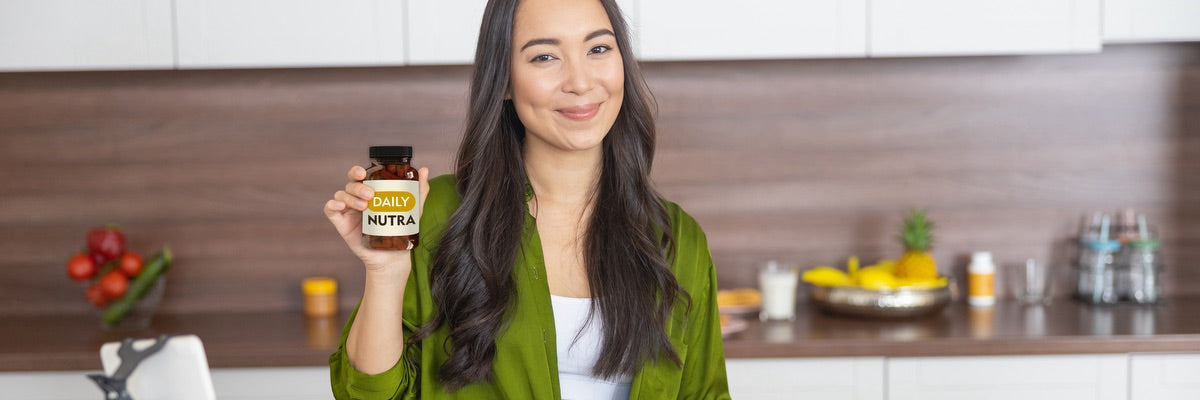
Daily Nutra KSM-66 Ashwagandha 600mg Capsules
Each serving delivers 600mg of clinically studied KSM-66® Ashwagandha root extract, standardized to ≥5% withanolides — the exact branded form used across human trials on stress, cortisol balance, and sleep quality. Flexible for morning, night, or split routines. No fillers, no proprietary blends. Just the root extract that works.
Shop KSM-66 Ashwagandha →References
- Chandrasekhar K, Kapoor J, Anishetty S. (2012). A prospective, randomized double-blind, placebo-controlled study of safety and efficacy of a high-concentration full-spectrum extract of ashwagandha root in reducing stress and anxiety in adults. Indian Journal of Psychological Medicine. PubMed
- Langade D, Kanchi S, Salve J, Debnath K, Ambegaokar D. (2020). Clinical evaluation of the pharmacological impact of ashwagandha root extract on sleep in healthy volunteers and insomnia patients: A double-blind, randomized, parallel-group study. Journal of Ethnopharmacology. PubMed
- Lopresti AL, Smith SJ, Malvi H, Kodgule R. (2019). An investigation into the stress-relieving and pharmacological actions of an ashwagandha (Withania somnifera) extract: A randomized, double-blind, placebo-controlled study. Medicine (Baltimore). PubMed
- Langade D, et al. / related sleep literature. (2020). Ashwagandha root extract and improvements in sleep quality parameters in clinical settings. Cureus / sleep outcome literature. PubMed
- Salve J, Pate S, Debnath K, Langade D. (2019). Adaptogenic and anxiolytic effects of ashwagandha root extract in healthy adults: A double-blind, randomized, placebo-controlled clinical study. Cureus. PubMed