What type of person should take ashwagandha?
Ashwagandha is not a general wellness vitamin. It is an adaptogen with a specific job: helping a dysregulated stress-response system settle back toward baseline. The people who tend to benefit are not "everyone who feels tired." They are adults whose symptoms line up with HPA-axis overdrive, poor stress recovery, or the downstream effects of chronically elevated cortisol. If that is you, the clinical literature on KSM-66 is unusually clear. If it is not, a different intervention may serve you better.
The typical candidate is not simply "stressed" — it is the person whose body no longer downshifts after the day is over.
The American Psychological Association has reported for years that a large majority of U.S. adults experience physical symptoms of stress. What those surveys do not capture is the biology underneath: when the hypothalamic-pituitary-adrenal (HPA) axis stays switched on, cortisol remains elevated, sleep architecture fragments, and recovery from both mental and physical load gets slower. That pattern — not a vague sense of being "busy" — is the clinical context in which ashwagandha has been studied.
In a randomized, double-blind, placebo-controlled trial, adults with a history of chronic stress who took a high-concentration full-spectrum ashwagandha root extract saw serum cortisol fall by 27.9% over 60 days, alongside meaningful drops in perceived stress. (1) A later dose-finding study found that 600 mg/day of KSM-66 outperformed 250 mg/day on both stress scores and morning cortisol. (2) Those are not lifestyle-blog numbers. They are the reason the question "who should take this?" has a real answer.
Form matters as much as the person taking it. KSM-66 is a root-only extract standardized to at least 5% withanolides, produced with a water-based process and used in more than two dozen human trials. Leaf-containing extracts, unstandardized powders, and proprietary blends do not automatically inherit that evidence. If you are a candidate, you want the extract the studies actually used.
This article maps the research onto real people: who fits the evidence, who should pause, and how to tell the difference before you buy a bottle.
What is KSM-66 ashwagandha?
Withania somnifera, known in Ayurveda as ashwagandha or Indian ginseng, has been classified for roughly 3,000 years as a rasayana — a rejuvenating tonic used for vitality, resilience, and recovery. In Sanskrit the name is often glossed as "smell of the horse," a reference to both the root's aroma and the traditional claim that it confers horse-like strength. That history is useful context. It is not, by itself, a reason to take it.
KSM-66 is a branded, full-spectrum root extract developed by Ixoreal Biomed. It is standardized to ≥5% withanolides, the steroidal lactones considered the primary bioactives, and it excludes leaf material. That last point is not marketing trivia. Leaf-heavy extracts can carry a different withanolide profile and have raised more safety questions than root-only preparations in the modern literature.
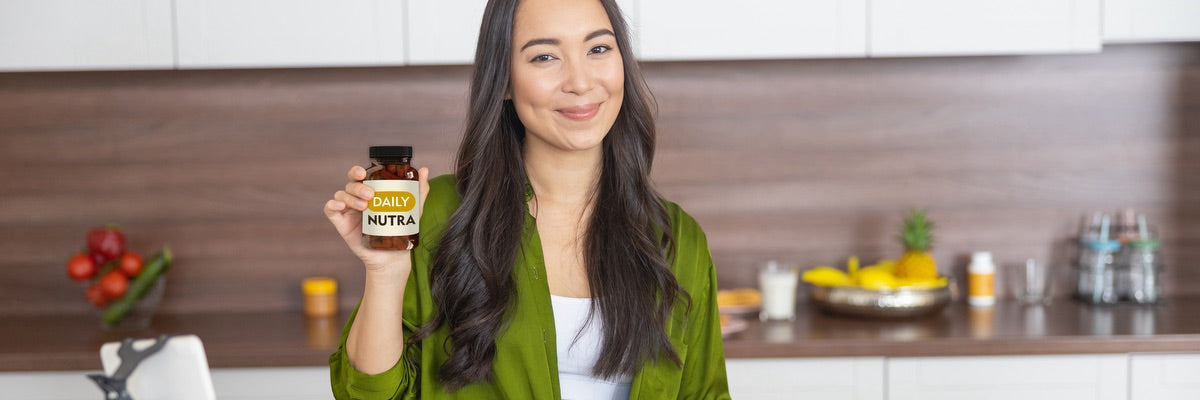
Daily Nutra uses 600 mg of KSM-66 per serving — the upper end of the dose range that consistently appears in human trials on stress, sleep, strength, and thyroid markers — with BioPerine to support absorption. The point of a standardized extract is simple: you can match the label to the papers.
How ashwagandha works: matching the mechanism to the person
Ashwagandha is classified as an adaptogen because it appears to normalize, rather than simply stimulate or sedate, the stress-response system. The most relevant pathway for candidate selection is the HPA axis. Under chronic threat, the hypothalamus keeps signaling the pituitary, which keeps signaling the adrenals, which keep releasing cortisol. People who live in that loop often describe themselves as wired at night, flat in the morning, and unable to recover from ordinary load.
KSM-66's most replicated finding is a reduction in serum cortisol in stressed but otherwise healthy adults. (1) (2) (3) If your primary problem is not HPA overactivation — if it is, for example, untreated major depression, iron-deficiency anemia, or sleep apnea — lowering cortisol is the wrong lever.
Secondary mechanisms help explain the other candidate groups. Withanolides show GABAergic activity that may account for improved sleep onset and reduced anxiety without classic sedation. (4) In resistance-trained men, KSM-66 has been associated with greater gains in strength and muscle size plus a rise in testosterone — a recovery and anabolic signal, not a stimulant effect. (5) In men with oligospermia, a root extract improved sperm count and motility. (6) In adults with subclinical hypothyroidism, 600 mg/day of KSM-66 improved TSH, T3, and T4 over eight weeks. (7)
Read those findings as a filter, not a promise. The person who should take ashwagandha is the person whose biology overlaps with those pathways: chronic stress load, poor recovery, sleep that will not consolidate, or a clinician-supervised thyroid or fertility picture that matches the trial populations.
The person who should not treat ashwagandha as a first move is the person whose symptoms are better explained by another diagnosis, or who sits in a group the trials deliberately excluded.
Candidate selection follows the mechanism: HPA overdrive, poor recovery, fragmented sleep, and low stress resilience — not a generic wellness habit.
What the clinical research shows
The chronically stressed adult
This is the strongest evidence base. Chandrasekhar and colleagues enrolled adults with a history of chronic stress and gave 300 mg of a high-concentration root extract twice daily for 60 days. Perceived stress scores fell sharply versus placebo, and serum cortisol dropped 27.9%. (1) Salve et al. later compared 250 mg and 600 mg of KSM-66 against placebo; both doses helped, and 600 mg produced the larger cortisol and stress-score changes. (2) If you are the person who cannot come down after work, who startles easily, and who feels "tired and wired" at the same time, you are the population these papers describe.
The adult who cannot recover from training
Wankhede et al. studied recreationally active men taking 300 mg of KSM-66 twice daily during an eight-week resistance program. Compared with placebo, the ashwagandha group gained more bench-press and leg-extension strength, added more muscle size, and showed a greater rise in testosterone, with better recovery markers. (5) The candidate here is not someone looking for a pre-workout stimulant. It is the lifter or endurance athlete whose recovery, sleep, and training quality have slipped under load.
The person whose sleep is light, late, or non-restorative
Langade and colleagues tested ashwagandha root extract in adults with insomnia and found improvements in sleep onset, sleep efficiency, and anxiety versus placebo. (4) Salve's KSM-66 study also reported better sleep quality at both 250 mg and 600 mg, without a sedative hangover. (2) The right person is someone whose sleep problem is stress-linked — racing thoughts, light sleep, early waking — not someone with untreated sleep apnea or a primary circadian disorder.
Adults under stress who are gaining weight they cannot explain
Choudhary et al. studied body-weight management in adults under chronic stress using KSM-66. The extract group lost more weight and reported better food-craving control than placebo, consistent with a cortisol-mediated effect rather than a stimulant or appetite-suppressant drug. (8) That makes ashwagandha a candidate adjunct for the stressed adult whose weight change tracks with HPA load — not a stand-alone fat-loss product.
Men with fertility concerns and adults with subclinical thyroid changes
In oligospermic men, ashwagandha root extract increased sperm count, semen volume, and motility, with corresponding hormone shifts. (6) In subclinical hypothyroid adults, 600 mg/day of KSM-66 for eight weeks significantly improved TSH, T3, and T4 versus placebo. (7) These are specialist-adjacent uses. They belong on the "good candidate, with a physician in the loop" list — not on a self-diagnosis checklist.
Dosage, form, and what to look for on the label
If you are a candidate, dose and extract type determine whether you are actually running the protocol from the papers.
- Clinical dose range: Most KSM-66 human trials use 300–600 mg per day. Stress, sleep, and thyroid studies cluster at 600 mg/day.
- Root-only extract: Look for KSM-66 or an equivalent root-only extract standardized to ≥5% withanolides. Avoid unlabeled "ashwagandha powder" and leaf-containing blends if you want trial-matching evidence.
- Standardization on the label: A 600 mg serving of KSM-66 delivers about 30 mg of withanolides. If the bottle will not state the extract name or the withanolide percentage, you cannot map it to the research.
- Timing: A single evening dose is common when sleep is the main complaint. Split morning/evening dosing is reasonable when daytime stress and training recovery are the goals.
- Duration: Published trials typically run 8–12 weeks. Adaptogens are not one-night interventions. Give a candidate protocol enough time to show a cortisol and sleep signal.
Daily Nutra KSM-66 Ashwagandha is built to that spec: 600 mg KSM-66 per serving, standardized to 5% withanolides, water-extracted, with BioPerine. That is the form a candidate should be comparing against the papers — not a proprietary blend that hides the dose.
Safety profile and side effects
In the major KSM-66 trials, ashwagandha has been well tolerated at 300–600 mg/day for 8–12 weeks. Reported side effects are usually mild and gastrointestinal — stomach upset, loose stool, or nausea — and often settle if the capsule is taken with food. (1) (2)
- Common, usually mild: Digestive discomfort, drowsiness in sensitive users, headache.
- Less common: Vivid dreams or a heavier-than-expected evening wind-down when dosed at night.
- Rare but important: Case reports have linked some ashwagandha products to liver injury. The signal is uncommon and not clearly tied to KSM-66 specifically, but anyone with existing liver disease should not self-start.
- Thyroid: Because KSM-66 can shift TSH, T3, and T4, people on thyroid hormone need clinician oversight, not a casual add-on. (7)
Ashwagandha is not appropriate as an unsupervised experiment in pregnancy, breastfeeding, or in people with hormone-sensitive prostate cancer. Those exclusions are as important as the candidate list.
Who should — and shouldn't — take ashwagandha
Ideal candidates
- Adults with chronic, body-level stress: High perceived stress, poor recovery from ordinary days, and the "tired and wired" pattern that matches HPA overactivation in the cortisol trials. (1)
- People whose sleep is stress-fragmented: Trouble falling or staying asleep that tracks with mental load, not an untreated primary sleep disorder. (4)
- Athletes and lifters in a heavy block: Training quality is fine until recovery, strength progression, or morning energy stalls. (5)
- Stressed adults noticing cortisol-pattern weight gain: Appetite and midsection change that rise and fall with stress load. (8)
- Men with clinician-evaluated fertility concerns: Oligospermia or low vitality where a root extract is being considered as an adjunct, not a substitute for workup. (6)
- Adults with subclinical hypothyroid labs under medical care: The Sharma trial used 600 mg/day of KSM-66 — this is a supervised use case. (7)
Who should consult a physician first?
- Pregnant or breastfeeding people: Human safety data are not adequate. Do not start.
- Anyone on thyroid hormone or with known thyroid disease: KSM-66 can affect thyroid labs. Coordinate with the prescribing clinician. (7)
- People with hormone-sensitive prostate cancer: Theoretical androgenic effects make unsupervised use a poor idea.
- Anyone taking sedatives, thyroid medication, immunosuppressants, or diabetes drugs: Potential additive or interacting effects need a pharmacist or physician review.
- People with autoimmune conditions: Ashwagandha may stimulate immune activity. Get clearance first.
- Anyone with active liver disease or unexplained jaundice: Stop and get evaluated; do not self-treat with an herbal extract.
- Children: The KSM-66 evidence base cited here is adult. Pediatric use is a separate clinical decision.
If you recognize yourself in the candidate profiles above, start with the extract and dose the human trials actually used — not a mystery blend.
Daily Nutra KSM-66 Ashwagandha 600mg
Better Ingredients | 100% Money Back Guarantee | 10 Years of Ancient Wisdom + Modern Science
Each serving delivers 600mg of clinically studied KSM-66® ashwagandha root extract, standardized to ≥5% withanolides — the exact form and dose used in published human clinical trials on stress, sleep, and recovery. No fillers, no proprietary blends. Just the root extract that works.
Shop KSM-66 Ashwagandha →References
- Chandrasekhar K, Kapoor J, Anishetty S. (2012). A prospective, randomized double-blind, placebo-controlled study of safety and efficacy of a high-concentration full-spectrum extract of ashwagandha root in reducing stress and anxiety in adults. Indian Journal of Psychological Medicine. PubMed
- Salve J, Pate S, Debnath K, Langade D. (2019). Adaptogenic and anxiolytic effects of ashwagandha root extract in healthy adults: A double-blind, randomized, placebo-controlled clinical study. Cureus. PubMed
- Lopresti AL, Smith SJ, Malvi H, Kodgule R. (2019). An investigation into the stress-relieving and pharmacological actions of an ashwagandha (Withania somnifera) extract: A randomized, double-blind, placebo-controlled study. Medicine. PubMed
- Langade D, Kanchi S, Salve J, Debnath K, Ambegaokar D. (2019). Efficacy and safety of ashwagandha (Withania somnifera) root extract in insomnia and anxiety: A double-blind, randomized, placebo-controlled study. Cureus. PubMed
- Wankhede S, Langade D, Joshi K, Sinha SR, Bhattacharyya S. (2015). Examining the effect of Withania somnifera supplementation on muscle strength and recovery: A randomized controlled trial. Journal of the International Society of Sports Nutrition. PubMed
- Ambiye VR, Langade D, Dongre S, Aptikar P, Kulkarni M, Dongre A. (2013). Clinical evaluation of the spermatogenic activity of the root extract of ashwagandha (Withania somnifera) in oligospermic males: A pilot study. Evidence-Based Complementary and Alternative Medicine. PubMed
- Sharma AK, Basu I, Singh S. (2018). Efficacy and safety of ashwagandha root extract in subclinical hypothyroid patients: A double-blind, randomized placebo-controlled trial. Journal of Alternative and Complementary Medicine. PubMed
- Choudhary D, Bhattacharyya S, Joshi K. (2017). Body weight management in adults under chronic stress through treatment with ashwagandha root extract: A double-blind, randomized, placebo-controlled trial. Journal of Evidence-Based Complementary & Alternative Medicine. PubMed