HEALTH NEWS ADVERTORIAL
How Much Ashwagandha Should You Take Per Day? The 600 mg Dose Explained
A teaspoon of grocery powder is not a dose — and most “calm” capsules never reach the milligram range the trials actually used.
Here is what peer-reviewed studies show about 250 mg vs 600 mg, split dosing, and why extract identity decides whether those milligrams count.
Ask how much ashwagandha to take and you will hear the same reassurance on repeat: “Just take some every day.” Forums treat a kitchen teaspoon, a gummy, and a 600 mg clinical capsule as interchangeable acts of wellness.
Labels lean into that blur. Bulk root powder, 100 mg “stress support” blends, and unstandardized extracts all borrow talking points from human trials — without matching the extract, the withanolide content, or the daily milligrams those papers actually tested.
But here is what the packaging does not spell out.
Ashwagandha is not a vitamin with a single RDA. It is an adaptogenic root whose published effects on stress, sleep, and recovery cluster around a named extract at a studied daily load — most often 600 mg of full-spectrum KSM-66 root, frequently given as 300 mg twice daily. A random scoop is not that protocol.
The evidence points somewhere else entirely: how much you take only matters if you are taking the same thing the journals measured.
Chronic psychological load keeps the hypothalamic-pituitary-adrenal (HPA) axis loud. Cortisol stays elevated, sleep fragments, and the “wired but tired” pattern becomes the new baseline. Adaptogens are studied as modulators of that stress response — not as sedatives you can micro-dose like melatonin.
Withania somnifera root contains withanolides, the marker compounds used to standardize extracts. KSM-66 is a water-extracted, full-spectrum root-only preparation typically standardized to about 5% withanolides. In the 2012 Chandrasekhar trial, adults under chronic stress took 300 mg twice daily (600 mg/day) for 60 days and showed large drops in perceived-stress scores and a roughly 28% reduction in serum cortisol versus placebo. Later work compared lower and higher daily loads and found the 600 mg arm generally outperformed 250 mg on stress and sleep-related measures.
This is not a minor technicality. If the bottle is 80 mg of unspecified “ashwagandha,” a leaf-root mix, or a teaspoon of unassayed powder, you are not answering “how much per day.” You are guessing at a different product.
"A high-concentration full-spectrum ashwagandha root extract at 600 mg per day reduced serum cortisol and improved stress-assessment scores versus placebo over 60 days."
Chandrasekhar, Kapoor & Anishetty — Indian Journal of Psychological Medicine
Summarized from a randomized, double-blind, placebo-controlled trial (300 mg twice daily)
"When healthy adults were randomized to 250 mg or 600 mg of ashwagandha root extract daily, the higher dose produced more consistent improvements in stress and anxiety measures."
Salve et al. — Cureus (2019)
Paraphrased from a double-blind, randomized, placebo-controlled dose-comparison study
"Patients keep asking for ‘a little ashwagandha.’ A little unstandardized powder is not a clinical dose. If we are using the stress literature, we are talking named root extract in the mid-hundreds of milligrams per day, taken consistently."
Integrative Clinician, RD / herbal practice
Paraphrased from published clinical positions on adaptogen dosing and adherence
Put simply: “How much ashwagandha per day?” is the wrong first question if the bottle cannot tell you which ashwagandha you are counting.
WHY A TEASPOON OF POWDER STILL ISN'T THE SAME AS A STUDIED DAILY DOSE
| Common Choice | Why It Still Fails | What You Continue to Notice |
|---|---|---|
| Kitchen teaspoon of root powder Grocery / bulk herb |
Weight and withanolides swing by batch. A “tsp” can be 1.5–3 g of unstandardized plant — or mostly stem dust — with no trial behind it. | Earthy taste, inconsistent calm, no clear change in sleep or stress load. |
| Low-dose “calm” gummies or blends Looks convenient, under-dosed |
Often 50–150 mg of unnamed extract next to sugar, botanicals, or melatonin. Not the 600 mg KSM-66 protocol. | A nightly ritual that feels healthy — the same 3 p.m. crash and 11 p.m. rumination. |
| Unspecified “root extract” 300 mg once Looks clinical, isn’t verified |
Half the common study load, no KSM-66 identity, no withanolide assay. Half a protocol is still a different experiment. | You “took ashwagandha.” Stress scores and sleep barely move. |
"Milligrams only mean something when the extract is the same molecule-for-molecule experiment the paper ran. Otherwise you are counting spoons, not dose."
Think of daily ashwagandha like a dimmer switch on a too-bright hallway. The HPA axis is the lighting circuit. Cortisol is the glare that keeps every room in the house slightly too loud — sleep, focus, recovery, patience.
A teaspoon of unknown powder is flicking a random switch in a different building. A 100 mg gummy is brushing the dimmer with your sleeve. The clinical literature is closer to turning that specific dimmer to a marked setting — about 600 mg of a standardized root extract — and leaving it there for weeks.
That is why dose-comparison work matters. Salve and colleagues did not only ask “does ashwagandha work?” They asked whether 250 mg and 600 mg behave the same. They do not. The higher, study-aligned load is the one that more reliably moved stress and related scores.
An under-dosed stress circuit does not stay in one symptom.
THE UNDER-DOSED STRESS CIRCUIT TOUCHES NEARLY EVERY SYSTEM IN THE BODY, INCLUDING:
Day to day, the problem rarely announces itself as “I am 400 mg short of KSM-66.” It shows up as a second coffee that still does not land, a jaw that never unclenches, sleep that looks long on a tracker but does not restore you, and a short fuse that feels like a personality change.
People treat each complaint as a separate project — a new tea, a sleep gadget, another under-dosed gummy — without noticing they share the same dimmer that never got set.
These are not separate complaints. They are the same bottleneck wearing different masks.
A teaspoon of powder cannot fix a dosing-and-identity problem. Which means the only real fix is a named root extract at the daily milligrams the trials actually used.
WHAT A TRULY RESEARCH-ALIGNED DAILY DOSE ACTUALLY NEEDS TO INCLUDE
If the goal is the outcome profile in human trials — not folklore — the checklist is non-negotiable.
A named, studied extract — not “ashwagandha” as a vibe
Human trials that answer the daily-dose question used identified root extracts (most often KSM-66), not anonymous grocery powder or leaf-root mystery blends.
A clinical milligram target (typically 600 mg/day)
The landmark stress trial used 300 mg twice daily (600 mg total). Sleep and anxiety work clusters in the same range. A 50–150 mg “calm blend” is a different experiment.
Withanolide standardization you can verify
KSM-66 is a full-spectrum root extract standardized to about 5% withanolides. Without an assay, “600 mg” can mean 600 mg of filler-heavy plant dust.
A duration that matches the literature (6–8+ weeks)
Cortisol, sleep, and recovery endpoints are measured at 8 weeks, not after three hopeful mornings. Dose without time is still under-dosing the protocol.
One serving you can actually take every day
Split 300 mg BID is how several RCTs were run. A single 600 mg capsule with water is the practical equivalent Daily Nutra is built around — compliance is part of the dose.
A clean label so you know what worked
No proprietary fog, no stimulant stack hiding a 100 mg sprinkle of root. If the bottle cannot name extract, milligrams, and withanolides, it cannot answer how much you took.
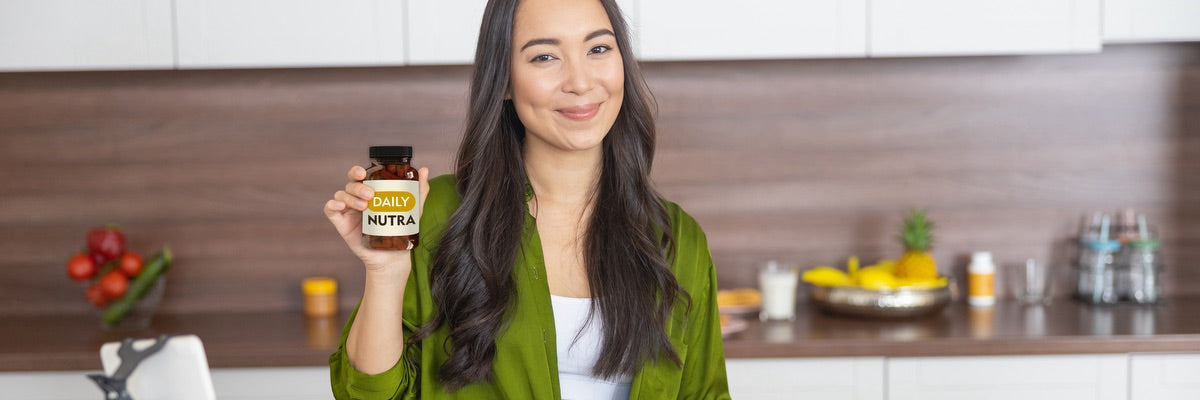
After comparing dozens of ashwagandha products on the market — powders, gummies, and under-dosed blends — we kept finding the same gap: labels that borrowed clinical language without the KSM-66 identity and 600 mg daily load the literature actually used. So Daily Nutra built the straightforward, studied-extract formula we could not reliably find.
Introducing
Daily Nutra KSM-66 Ashwagandha 600mg Capsules
One clinical-range serving — the daily milligrams the stress trials actually used
✓ Genuine KSM-66® full-spectrum root
✓ 600 mg per serving — the studied daily range
✓ Standardized withanolide profile (~5%)
✓ One capsule, once daily with water
✓ No proprietary-blend hide-and-seek
✓ Clean capsule formula
✓ Ancient adaptogen + modern trial doses
✓ 100% money-back guarantee
Clinical-range KSM-66 batches move quickly when demand spikes. Check live stock before this run sells through.
CHECK AVAILABILITY →What Customers Are Reporting
Customer Results — Daily Nutra KSM-66 Ashwagandha 600mg Capsules
87%
report a calmer daily baseline
4.8★
average verified rating
<1%
request a refund
8 wks
typical window customers reassess
★★★★★ Verified Buyer
"I was taking a cheap 150 mg capsule and wondering why nothing changed. Switching to a real 600 mg KSM-66 serving was the first time the dose matched the articles I kept reading."
— Priya
★★★★★ Verified Buyer
"I used to scoop random powder and guess a teaspoon. One labeled capsule took the math — and the evening wired-but-tired feeling — off my plate."
— James
★★★★★ Verified Buyer
"Week three I noticed I was not white-knuckling Sunday nights. I stayed at 600 mg because that is what the stress study actually used."
— Elena
What to Expect — Month by Month
MONTH 1 — THE DIMMER STARTS TO MOVE
Many people notice easier evening wind-down and a slightly quieter baseline as a true 600 mg serving becomes a daily habit — not a teaspoon guess.
MONTHS 2–3 — THE WINDOW THE TRIALS MEASURED
Stress scores, sleep quality, and recovery markers in the literature are typically captured around 8 weeks. This is when “I took some” either becomes a protocol — or it does not.
MONTHS 4–6 — HOLD THE SETTING
With the daily load consistent, sleep and stress habits have a cleaner runway. This is maintenance of a studied dose, not a one-week experiment.
If you have been asking how much ashwagandha per day, run the extract and milligrams the studies actually used — while supply lasts.
CHECK AVAILABILITY →Most people already spend more than this on a daily coffee or another under-dosed “calm” gummy. Daily Nutra KSM-66 is priced so a full clinical-range serving is realistic — typically well under the cost of another month of half-measures — so the barrier is consistency, not a luxury price tag.
⚠ SUPPLY UPDATE
Authenticated KSM-66 inventory is allocated in limited production runs. When the current lot is spoken for, restock timing can slip.
90-Day 100% Money-Back Guarantee
Give the protocol a real window — up to three full months. If it is not for you, request a refund. Less than 1% of customers ever ask.
Stop guessing with teaspoons. Run the studied daily dose.
Daily Nutra KSM-66 Ashwagandha — 600 mg clinical-range capsules
TRY OUR RISK-FREE OFFER →KSM-66 full-spectrum root · 90-day guarantee · Ancient wisdom + modern science
🌿 Ready to take the daily ashwagandha dose the research actually used? Start with 600 mg of KSM-66 — one capsule, no teaspoon math. ✨
STUDIES & SOURCES REFERENCED ▾
- Chandrasekhar K, Kapoor J, Anishetty S. A prospective, randomized double-blind, placebo-controlled study of safety and efficacy of a high-concentration full-spectrum extract of ashwagandha root in reducing stress and anxiety in adults. Indian J Psychol Med. 2012;34(3):255-262. 300 mg twice daily (600 mg/day) for 60 days. PubMed 23439798
- Salve J, Pate S, Debnath K, Langade D. Adaptogenic and anxiolytic effects of ashwagandha root extract in healthy adults: a double-blind, randomized, placebo-controlled clinical study. Cureus. 2019;11(12):e6466. Compared 250 mg/day vs 600 mg/day. PubMed 32021735
- Langade D, Kanchi S, Salve J, Debnath K, Ambegaokar D. Efficacy and safety of ashwagandha (Withania somnifera) root extract in insomnia and anxiety: a double-blind, randomized, placebo-controlled study. Cureus. 2019;11(9):e5797. 300 mg twice daily. PubMed 31728244
- Wankhede S, Langade D, Joshi K, Sinha SR, Bhattacharyya S. Examining the effect of Withania somnifera supplementation on muscle strength and recovery: a randomized controlled trial. J Int Soc Sports Nutr. 2015;12:43. 300 mg twice daily for 8 weeks. PubMed 26609282
- Kelgane SB, Salve J, Sampara P, Debnath K. Efficacy and tolerability of ashwagandha root extract in the elderly for improvement of general well-being and sleep: a prospective, randomized, double-blind, placebo-controlled study. Cureus. 2020;12(2):e7083. 600 mg/day. PubMed 32226636
- Lopresti AL, Smith SJ, Malvi H, Kodgule R. An investigation into the stress-relieving and pharmacological actions of an ashwagandha (Withania somnifera) extract: a randomized, double-blind, placebo-controlled study. Medicine (Baltimore). 2019;98(37):e17186. PubMed 31517876
- Speers AB, Cabey KA, Soumyanath A, Wright KM. Effects of Withania somnifera (Ashwagandha) on stress and the stress-related neuropsychiatric disorders anxiety, depression, and insomnia. Curr Neuropharmacol. 2021;19(9):1468-1495. PubMed 34254920
- Bonilla DA, et al. Effects of ashwagandha (Withania somnifera) on physical performance: systematic review and Bayesian meta-analysis. J Funct Morphol Kinesiol. 2021;6(1):20. PubMed 33670194
*These statements have not been evaluated by the Food and Drug Administration. This product is not intended to diagnose, treat, cure, or prevent any disease. Individual results vary. Consult a qualified clinician before use, especially if you are pregnant, nursing, have a thyroid condition, take sedatives or thyroid medication, or have an autoimmune disorder. Typical studied adult intakes of standardized root extract cluster around 250–600 mg/day; do not exceed label directions.