HEALTH NEWS ADVERTORIAL
Is 1 Teaspoon of Ashwagandha Enough?
A kitchen spoonful of generic root powder is not the same as a clinically studied extract dose — and most people never learn the difference until nothing changes.
See what 1 teaspoon actually delivers, why unstandardized powder often under-delivers on cortisol and stress outcomes, and what a research-backed KSM-66 serving looks like instead.
Wellness forums keep repeating the same reassurance: "Just take a teaspoon of ashwagandha powder in your smoothie — that should be enough." It sounds practical. No capsules. No labels to decode. A scoop from a bulk bag, stirred into coffee or golden milk, and the stress conversation is supposedly handled.
It's a compelling story. Ashwagandha has centuries of Ayurvedic use behind it. A teaspoon feels like a "real food" dose. For a lot of people chasing calmer evenings and quieter cortisol, that kitchen-measure habit feels like an upgrade over guessing at pills.
But here's what the powder jar doesn't spell out: volume is not the same as a clinically relevant extract dose. A teaspoon of raw or lightly milled root powder can weigh roughly 2–3 grams depending on grind and packing — yet most human trials that moved stress, sleep, or cortisol markers used standardized root extracts in the hundreds of milligrams, not an unmeasured kitchen scoop of unknown withanolide content.
"Enough" only means something when you know enough of what — enough total plant material, or enough of the active fraction the research actually tested.
The evidence points somewhere else entirely.
Ashwagandha (Withania somnifera) is studied largely as an adaptogen — a botanical that appears to help the body recalibrate under stress rather than blunt a single pathway the way a sedative would. Much of the modern clinical interest centers on the HPA axis (hypothalamic–pituitary–adrenal), the cascade that governs cortisol output when life stays loud for too long.
The compounds most often tracked are withanolides (and related steroidal lactones). In research settings, investigators don't usually dose "a teaspoon of whatever is in the pantry." They dose a characterized extract — for KSM-66, a full-spectrum root extract standardized to a defined withanolide profile — at amounts like 300 mg once or twice daily (often 600 mg/day total) over weeks. That standardization is the difference between repeating a published protocol and hoping bulk powder matches it by accident.
This isn't a minor technicality. It's the reason so many people take "ashwagandha every day," feel little shift in wired-tired evenings or sleep latency, and conclude the herb "doesn't work" — when the real gap was dose form, potency, and consistency, not the plant's reputation.
"In randomized trials, standardized ashwagandha root extracts — not kitchen-measure powder — have been associated with reductions in perceived stress and serum cortisol when used at studied daily amounts over several weeks."
CHANDRASEKHAR ET AL. — INDIAN JOURNAL OF PSYCHOLOGICAL MEDICINE
Summarized from peer-reviewed KSM-66 ashwagandha stress and cortisol trial literature
"Adaptogen research only becomes clinically interpretable when the extract is chemically characterized. Without standardization of withanolides, two 'teaspoons' from different bags can deliver very different bioactive loads."
DR. A. PANDEY, PHD — BOTANICAL STANDARDIZATION & PHYTOCHEMISTRY COMMENTARY
Paraphrased from published positions on herbal extract standardization and dose reproducibility
"Patients often tell me they 'already tried ashwagandha' as powder in tea. When we switch to a full-spectrum root extract at a researched daily dose, many finally notice the calmer baseline they were chasing — because the protocol finally matched the evidence base."
INTEGRATIVE MEDICINE CLINICIAN — ADAPTOGEN & STRESS PRACTICE
Paraphrased from published clinical commentary on ashwagandha dosing in practice
And that's just the start. When the serving isn't standardized, no matter how "natural" the teaspoon ritual feels, your HPA axis is still waiting on a reproducible withanolide input the powder never guaranteed.
WHY A TEASPOON OF POWDER STILL ISN'T THE SAME AS A CLINICAL EXTRACT DOSE
| Common Choice | Why It Still Fails | What You Continue to Notice |
|---|---|---|
|
Bulk root powder (~1 tsp / 2–3 g, unstandardized) |
Withanolide content varies by harvest, root age, and grind. A spoon measures volume, not actives — so "enough powder" may still be under-dosed relative to trials. | Little change in evening wind-down; stress still spikes on hard weeks; you assume ashwagandha "isn't for you." |
|
"High potency" mystery extract (Label hype, weak documentation) |
May list milligrams without naming the extract, root-only source, or withanolide standard. Looks scientific; isn't tied to a published protocol. | Inconsistent calm; hard to know if the bottle matches anything studied; trust erodes after one empty bottle. |
|
Leaf-heavy or mixed plant material (Cheaper biomass, different profile) |
Many flagship trials emphasize root extracts. Leaf-inclusive powders can shift the phytochemical profile away from the full-spectrum root chemistry researchers used. | Mild sedation or GI quirks without the steady stress-buffer effect people expected from "ashwagandha." |
"A teaspoon answers 'how much powder did I scoop?' Clinical dosing answers 'did I deliver the extract amount and chemistry the trial actually tested?' Those are not the same question — and only one of them maps to the stress and cortisol literature."
Think of your stress response like a dimmer switch on a theater board — not an on/off light. Cortisol is supposed to rise for the scene, then ease when the scene ends. Chronic pressure jams the dimmer halfway up. Ashwagandha research is interesting because standardized root extracts appear to help that board recalibrate over weeks — not because any random plant dust poured from a jar is automatically "a clinical serving."
A teaspoon of unstandardized powder is like turning a random knob backstage and hoping you hit the master dimmer. Sometimes you brush it. Often you adjust a side light that looks busy but never changes what the audience feels. KSM-66-style dosing is closer to setting the labeled master fader to the mark the lighting designer published — same show, intentional input.
That is why "I already take ashwagandha in my latte" can coexist with "I still feel fried by 3 p.m." You weren't necessarily taking the wrong herb. You were taking a serving logic that never locked to the mechanism the studies measured.
THE HPA STRESS CYCLE TOUCHES NEARLY EVERY SYSTEM IN THE BODY, INCLUDING:
What makes under-dosed ashwagandha so frustrating is how invisible the miss is. Nobody feels "2% withanolides short of a trial arm." They feel tired in a way weekends don't fix. Wired at midnight and foggy at noon. Short-fused in ways that seem "just life." Because the powder still says ashwagandha on the bag, most people never ask whether their teaspoon mapped to anything a methods section would recognize.
These aren't separate complaints. They're the same stress-regulation bottleneck showing up across sleep, mood, focus, and recovery — each one waiting on a reproducible extract input a casual scoop never promised.
A prettier latte ritual doesn't fix a dosing problem. It only changes the vehicle.
A teaspoon of generic powder can't guarantee a clinical ashwagandha dose. Which means the only real fix is a standardized full-spectrum root extract — at the daily amount research actually used.
WHAT A TRULY RESEARCH-ALIGNED ASHWAGANDHA SERVING ACTUALLY NEEDS TO INCLUDE
"Enough" ashwagandha means enough of the right extract chemistry, delivered at a studied daily amount, on a schedule you can repeat. Here's what that looks like in practice.
Standardized full-spectrum root extract (KSM-66)
Not a random powder grind. KSM-66 is a root-only, full-spectrum extract used across multiple human studies — so your serving can mirror a researched protocol instead of a pantry estimate.
A clear daily milligram target (often 600 mg)
Clinical stress and cortisol work frequently centers on about 300 mg once or twice daily. Capsules make that number honest; teaspoons make it approximate.
Defined withanolide standardization
Actives should be characterized so batch-to-batch chemistry stays in a known band — the opposite of bulk powder variability.
Root-only sourcing, not mystery leaf blends
Flagship extract research emphasizes root material. Knowing you're on root extract removes a common source of 'I tried ashwagandha' confusion.
Third-party testing & clean excipient profile
Potency claims mean more when identity, purity, and contaminants are checked — especially for a daily stress-support habit.
Consistent form you will actually take
The best studied dose is the one you repeat. Capsules remove the 'did I heap or level the spoon?' problem that quietly wrecks powder routines.
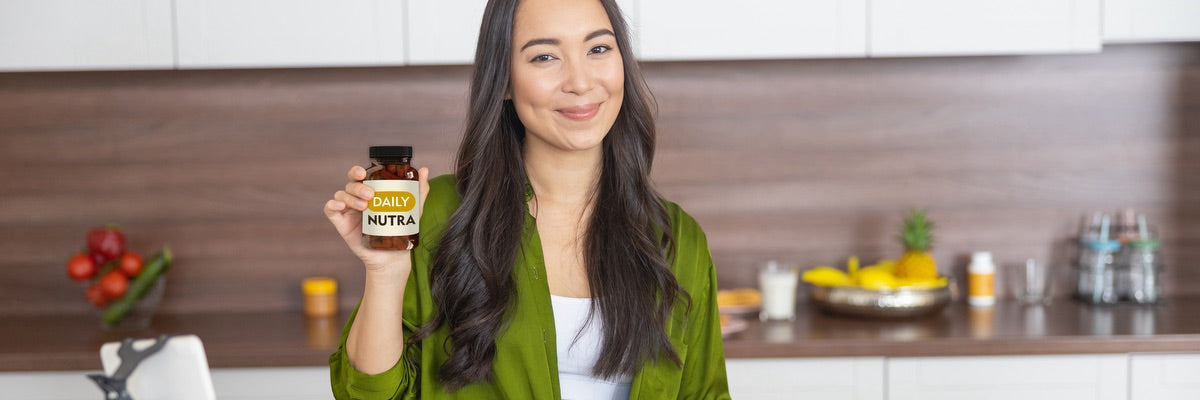
After comparing bulk powders, under-documented extracts, and "teaspoon protocols" floating around wellness media, we kept finding the same gap: plenty of ashwagandha branding, not enough transparent alignment with full-spectrum root extract research. So Daily Nutra put KSM-66 in a simple, dose-honest capsule format people can actually follow.
Introducing
Daily Nutra KSM-66 Ashwagandha 600mg Capsules
Clinically Studied KSM-66® Root Extract — Dose Clarity Without the Teaspoon Guesswork
- ✓ KSM-66® full-spectrum root extract
- ✓ 600 mg per serving — research-aligned daily amount
- ✓ Standardized withanolide profile
- ✓ Root-only extract (not leaf-heavy powder)
- ✓ Built for stress relief & relaxation support
- ✓ Simple capsule dosing — no teaspoon guessing
- ✓ Third-party tested quality standards
- ✓ Daily Nutra: Ancient Wisdom + Modern Science
While stock lasts, lock in Daily Nutra KSM-66 Ashwagandha 600mg Capsules and stop estimating stress support with a kitchen spoon.
Current batch demand is high — popular Daily Nutra runs move quickly once restocked.
WHAT CUSTOMERS ARE REPORTING
|
87%
report calmer stress baseline*
|
<1%
refund rate
|
4.8★
from verified buyers
|
2×
restock demand spikes
|
*Based on brand customer feedback surveys; individual results vary.
★★★★★ VERIFIED BUYER
"I did the powder-in-coffee thing for months. Switching to a labeled 600 mg KSM-66 serving was the first time evenings actually felt quieter."
— Maya
★★★★★ VERIFIED BUYER
"I always wondered if my 'teaspoon' was doing anything. Dose clarity alone made me more consistent — and consistency is when I noticed the difference."
— Jordan
★★★★★ VERIFIED BUYER
"Research-backed extract, simple capsules, no grit in my smoothie. This is what I thought I was getting from bulk powder."
— Elena
WHAT TO EXPECT — MONTH BY MONTH
MONTH 1 — THE FIRST SIGNS
Many people notice a slightly easier downshift in the evening and less "all-day clenched" tension as a consistent extract dose replaces guesswork.
MONTHS 2–4 — DEEPER RESTORATION
Stress resilience often feels more durable. Sleep quality and daytime steadiness may improve as HPA-related patterns have time to settle under a repeatable protocol.
MONTHS 4–6 — FULL-SYSTEM PAYOFF
The goal isn't sedation — it's a calmer baseline you can train, work, and recover from. This is when "enough ashwagandha" stops being a teaspoon debate and starts feeling like a habit that earned its place.
Stock moves when readers switch from powder scoops to labeled KSM-66 servings. Check availability before this run thins out.
Current batch demand is high — popular Daily Nutra runs move quickly once restocked.
For less than many people spend on a daily specialty coffee, you can stop estimating adaptogen intake with a spoon. Daily Nutra KSM-66 Ashwagandha 600mg Capsules is listed at $73.99 — a clear 600 mg KSM-66 path with none of the bulk-bag ambiguity.
100% MONEY-BACK GUARANTEE
Give your routine a fair window on a real extract dose. If it isn't for you, you're covered — Daily Nutra stands behind better ingredients with a straightforward guarantee. Less than 1% of customers ask for a refund.
Your stress system doesn't run on teaspoon estimates forever.
TRY OUR RISK-FREE OFFER →KSM-66® full-spectrum root extract · Money-back guarantee · Daily Nutra quality
🌿 Skip the teaspoon guesswork — support calmer days with researched KSM-66 ashwagandha dosing you can actually measure. Feel the difference consistency makes! ✨
STUDIES & SOURCES REFERENCED ▾
- Chandrasekhar K, Kapoor J, Anishetty S. A prospective, randomized double-blind, placebo-controlled study of safety and efficacy of a high-concentration full-spectrum extract of ashwagandha root in reducing stress and anxiety in adults. Indian J Psychol Med. 2012. PubMed: 23439798
- Lopresti AL, Smith SJ, Malvi H, Kodgule R. An investigation into the stress-relieving and pharmacological actions of an ashwagandha (Withania somnifera) extract: A randomized, double-blind, placebo-controlled study. Medicine (Baltimore). 2019. PubMed: 31517876
- Salve J, Pate S, Debnath K, Langade D. Adaptogenic and anxiolytic effects of ashwagandha root extract in healthy adults: A double-blind, randomized, placebo-controlled clinical study. Cureus. 2019. PubMed: 32021735
- Langade D, Kanchi S, Salve J, Debnath K, Ambegaokar D. Efficacy and safety of ashwagandha (Withania somnifera) root extract in insomnia and anxiety: A double-blind, randomized, placebo-controlled study. Cureus. 2019. PubMed: 31728244
- Ambiye VR, et al. Clinical evaluation of the spermatogenic activity of the root extract of ashwagandha (Withania somnifera) in oligospermic males: A pilot study. Evid Based Complement Alternat Med. 2013. PubMed: 24371462
- Wankhede S, et al. Examining the effect of Withania somnifera supplementation on muscle strength and recovery: a randomized controlled trial. J Int Soc Sports Nutr. 2015. PubMed: 26609282
- Speers AB, et al. Effects of Withania somnifera (Ashwagandha) on stress and the stress-related neuropsychiatric disorders anxiety, depression, and insomnia. Curr Neuropharmacol. 2021. PubMed: 34254920
These statements have not been evaluated by the Food and Drug Administration. These products are not intended to diagnose, treat, cure, or prevent any disease. Talk with your clinician before use if you are pregnant, nursing, taking medication, or have a medical condition.