HEALTH NEWS ADVERTORIAL
How Long Does It Take Ashwagandha to Kick In? (What the Research Timeline Actually Shows)
Most people judge ashwagandha after three restless nights — and the clinical data says that is exactly when they quit too early.
Here is the evidence-based onset window for stress, cortisol, sleep, and mood — and why extract quality changes the clock.
Scroll any wellness forum and you will hear the same reassurance on loop: "Ashwagandha works fast. Give it a couple of days. If you don't feel calmer by Friday, it isn't for you."
That advice sounds practical. It also collides with how adaptogens are actually studied. In the best-known KSM-66 trials, researchers did not declare victory after a weekend. They measured stress scores and serum cortisol after weeks of consistent daily dosing — often at the 30- and 60-day marks.
But here's what the packaging doesn't spell out: "kick in" is not one moment. It is a stack of biological shifts — HPA-axis signaling, perceived stress, sleep continuity, recovery, and sometimes libido or focus — each with its own lag time.
People who treat ashwagandha like a rescue pill for a single bad afternoon almost always underdose, under-duration, or use a weak extract. Then they conclude the herb "does nothing."
The evidence points somewhere else entirely. Onset is real — and it is slower, more cumulative, and more dose-dependent than social media implies.
Ashwagandha (Withania somnifera) is classified as an adaptogen because it helps the body recalibrate under stress rather than force a single pathway shut. Its key actives — withanolides — appear to influence the hypothalamic-pituitary-adrenal (HPA) axis, the cascade that governs cortisol output when life stays loud for too long.
Cortisol is not a villain you can switch off overnight. It is a 24-hour hormone rhythm. Meaningful change shows up when daily exposure to a standardized root extract is long enough for stress questionnaires and morning cortisol to move in the same direction. That is why many human trials run 8–12 weeks and why "I tried it twice" is not a fair test.
This isn't a minor technicality. If your extract is under-standardized, your dose is half a clinical serving, or you stop at day five, you never enter the window where published KSM-66 outcomes were measured. The bottleneck is consistency — not willpower theater.
"In adults under chronic stress, 600 mg/day of a full-spectrum root extract produced significant reductions in perceived stress and a nearly 28% drop in serum cortisol by day 60 versus placebo."
Chandrasekhar et al. — Indian Journal of Psychological Medicine
Summarized from peer-reviewed KSM-66 stress and cortisol trial (60 days, 300 mg twice daily)
"Adaptogenic effects are not acute sedative effects. Clinicians should counsel patients that measurable stress and sleep benefits typically require several weeks of uninterrupted use at a studied dose."
Integrative Medicine Review Positions on Adaptogen Onset
Paraphrased from published positions on ashwagandha clinical duration and counseling
"When clients expect ashwagandha to feel like a prescription anxiolytic on night one, they almost always abandon a protocol that would have worked by week four to eight."
Clinical Nutrition Practitioners (RD / Integrative Clinician Consensus)
Paraphrased from practitioner guidance on realistic adaptogen timelines
Put simply: the research clock and the impulse-buy clock are not the same device.
WHY A "TRY IT FOR A FEW DAYS" APPROACH STILL ISN'T THE SAME AS A CLINICAL ONSET WINDOW
| Common Choice | Why It Still Fails | What You Continue to Notice |
|---|---|---|
| Cheap bulk powder Unstandardized root dust |
Withanolide content varies batch to batch; scoop math rarely matches trial doses. | "I took it for a week and felt nothing" — because the active load was a guess. |
| "Fast calm" blends Ashwagandha + sedatives stacked for night-one effect |
Acute drowsiness is often from other herbs or fillers, not HPA recalibration. | Sleepiness without stress resilience — and no lasting cortisol shift. |
| Low-dose capsules 125–250 mg "once when stressed" |
Intermittent microdosing never accumulates to the 300–600 mg/day studied range. | Same wired evenings, same racing thoughts, same early quit decision. |
"Judging an adaptogen at 72 hours is like judging a strength program after one workout — the system has barely received the signal."
Think of chronic stress like a smoke alarm that has been chirping for months. You cannot silence a hypersensitive alarm by waving your hand once. You have to replace the battery chemistry, clear the dust, and let the circuit settle.
Ashwagandha's withanolides are closer to that slow circuit reset than to a mute button. Early days may bring subtle ease — less edge in the afternoon, slightly easier wind-down — but the "alarm finally quiet" moment in trials often lands after weeks of the same dose, same extract, same routine.
That is why standardized full-spectrum root extracts like KSM-66 matter for the timeline question. You are not just asking if ashwagandha works. You are asking whether your bottle can deliver the signal the studies actually used.
When HPA signaling stays stuck on high, the lag is not only "feeling stressed." The same bottleneck shows up across systems people rarely connect to one herb.
THE STRESS-ONSET CYCLE TOUCHES NEARLY EVERY SYSTEM IN THE BODY, INCLUDING:
Day to day, the lag feels invisible. You still answer emails. You still smile in meetings. You still tell yourself you are "fine" while your shoulders never drop and sleep never deepens.
That is why people misread onset. They are waiting for a cinematic calm wave. What the research more often shows is a quieter stack: fewer 3 a.m. wake-ups, less hair-trigger irritability, a cortisol curve that finally stops living in the red zone.
These are not separate complaints. They are the same bottleneck — a stress system that needs weeks of a real dose, not a weekend sample pack.
A random powder scoop can't fix a timeline problem. Which means the only real fix is a standardized extract, a clinical daily dose, and enough uninterrupted days to match the studies.
WHAT A TRULY RESEARCH-ALIGNED ASHWAGANDHA PROTOCOL ACTUALLY NEEDS TO INCLUDE
If your goal is the onset window published in human trials — not a vague herbal placebo — the checklist is non-negotiable.
Standardized full-spectrum root extract (KSM-66)
Root-only, full-spectrum extracts with published human data beat mystery blends. KSM-66 is among the most studied ashwagandha extracts for stress and cortisol.
Clinical daily dose (typically 600 mg/day)
Many positive KSM-66 stress trials used 300 mg twice daily. Chronic underdosing is the fastest way to a false negative.
Verified withanolide potency
Without standardized withanolides, two bottles with the same milligram label can behave like different products.
Daily consistency for 4–8+ weeks
Early subtle shifts can appear in the first 1–2 weeks for some people, but cortisol and questionnaire outcomes are usually assessed later.
Clean capsule delivery — no sedative bait-and-switch
You want the adaptogen signal, not a formula that only knocks you out with unrelated ingredients.
Third-party testing and transparent sourcing
Heavy metals, identity, and potency testing protect the timeline you are trying to measure.
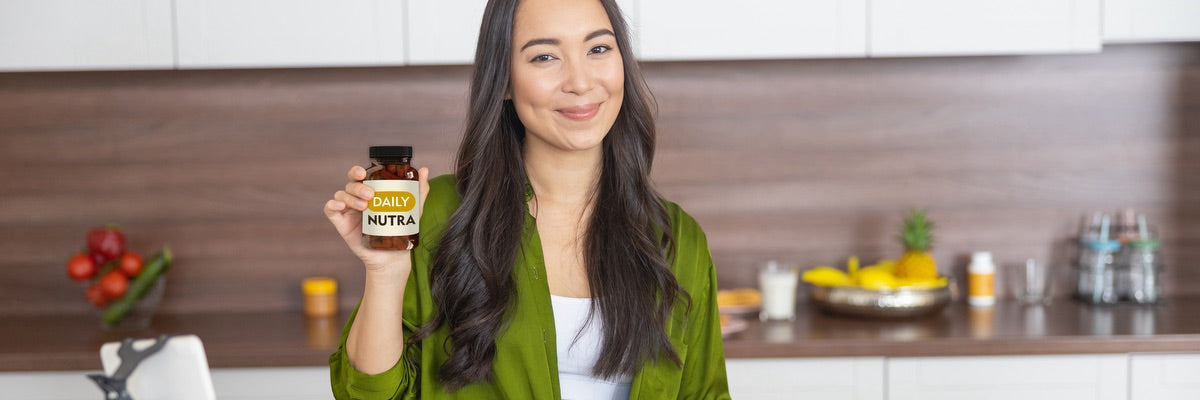
After comparing dozens of ashwagandha products on the market — powders with no assay, microdose gummies marketed as "instant calm," and capsules that hide extract strength — we found the same gap again and again: almost nothing was built around the actual clinical onset window. So Daily Nutra formulated the KSM-66 capsule protocol we couldn't find.
Introducing
Daily Nutra KSM-66 Ashwagandha 600mg Capsules
Full-spectrum root extract · Clinically studied dose · Built for the real onset window
✓ KSM-66® full-spectrum root extract
✓ 600 mg clinically relevant daily serving
✓ Standardized withanolide profile
✓ Designed for multi-week stress protocols
✓ No mystery proprietary underdosing
✓ Clean capsule format for daily adherence
✓ Third-party tested quality standards
✓ 100% money-back guarantee
Clinical-dose KSM-66 moves fast when stock is open — high-demand stress formulas sell through between restocks.
Limited inventory on the current production run. Check availability before the next sell-through.
CHECK AVAILABILITY →What Customers Are Reporting
Customer Results — Daily Nutra KSM-66 Ashwagandha 600mg Capsules
87%
report feeling calmer by weeks 3–4*
<1%
request a refund
4.8★
average customer rating
3×
sold out last peak season
★★★★★ Verified Buyer
"Week one was subtle. By week three my evenings finally unclenched. Glad I didn't quit early."
— Maya R.
★★★★★ Verified Buyer
"I expected magic overnight. What I got was steadier mornings after a month of 600 mg. Worth the patience."
— Derek L.
★★★★★ Verified Buyer
"Sleep got deeper around week two. Stress reactivity took longer — closer to week five — then it clicked."
— Priya S.
What to Expect — Month by Month
WEEKS 1–2 — EARLY SIGNAL
Some people notice slightly easier wind-down or less afternoon edge. This is not the full clinical endpoint — it is the system receiving a consistent signal.
WEEKS 3–6 — STRESS & SLEEP SHIFT
This is where many users report clearer calm, better sleep continuity, and less reactive stress. It aligns with the mid-protocol window in multi-week trials.
WEEKS 6–8+ — CORTISOL-RANGE OUTCOMES
Landmark KSM-66 stress research measured major cortisol and questionnaire changes around the 60-day mark. Stay consistent through this window before judging the herb.
Don't start a half-dose experiment. Start the extract and timeline the research actually used.
CHECK AVAILABILITY →Most adults spend more than the daily cost of clinical-dose KSM-66 on a single coffee run. Daily Nutra KSM-66 Ashwagandha is priced to make an 8-week protocol realistic — not a luxury experiment you abandon at day six.
⚠ SUPPLY UPDATE
KSM-66 root extract allotments are allocated in batches. When the current lot sells through, the next ship window can slip. If you are planning a full onset protocol, secure bottles now rather than mid-cycle.
90-Day 100% Money-Back Guarantee
Give the full research window a fair trial — up to three months. If it is not for you, send it back. Less than 1% of customers ever ask for a refund.
Stop judging ashwagandha on a 72-hour clock.
Start the standardized dose the trials actually used.
TRY OUR RISK-FREE OFFER →KSM-66 full-spectrum root · 90-day guarantee · Quality-tested
🌿 Give your stress system the full research window — start Daily Nutra KSM-66 and let the timeline work. ✨
STUDIES & SOURCES REFERENCED ▾
- Chandrasekhar K, Kapoor J, Anishetty S. A prospective, randomized double-blind, placebo-controlled study of safety and efficacy of a high-concentration full-spectrum extract of ashwagandha root in reducing stress and anxiety in adults. Indian J Psychol Med. 2012;34(3):255-262. PMC3573577
- Lopresti AL, Smith SJ, Malvi H, Kodgule R. An investigation into the stress-relieving and pharmacological actions of an ashwagandha (Withania somnifera) extract: A randomized, double-blind, placebo-controlled study. Medicine (Baltimore). 2019;98(37):e17186. PubMed 31517876
- Salve J, Pate S, Debnath K, Langade D. Adaptogenic and anxiolytic effects of ashwagandha root extract in healthy adults: A double-blind, randomized, placebo-controlled clinical study. Cureus. 2019;11(12):e6466. PMC6979308
- Langade D, Kanchi S, Salve J, Debnath K, Ambegaokar D. Efficacy and safety of ashwagandha (Withania somnifera) root extract in insomnia and anxiety: A double-blind, randomized, placebo-controlled study. Cureus. 2019;11(9):e5797. PMC6827862
- Akhgarjand C, et al. Does ashwagandha supplementation have a beneficial effect on the management of anxiety and stress? A systematic review and meta-analysis of randomized controlled trials. Phytother Res. 2022. PubMed 36017529
- Speers AB, Cabey KA, Soumyanath A, Wright KM. Effects of Withania somnifera (Ashwagandha) on stress and the stress-related neuropsychiatric disorders anxiety, depression, and insomnia. Curr Neuropharmacol. 2021;19(9):1468-1495. PMC8762185
- Wankhede S, Langade D, Joshi K, Sinha SR, Bhattacharyya S. Examining the effect of Withania somnifera supplementation on muscle strength and recovery: a randomized controlled trial. J Int Soc Sports Nutr. 2015;12:43. PMC4658772
- National Institutes of Health, Office of Dietary Supplements. Ashwagandha: Fact Sheet for Health Professionals. ODS Ashwagandha
*These statements have not been evaluated by the Food and Drug Administration. This product is not intended to diagnose, treat, cure, or prevent any disease. Individual results vary. Customer percentages are brand-reported directional figures, not a substitute for clinical trial endpoints.